
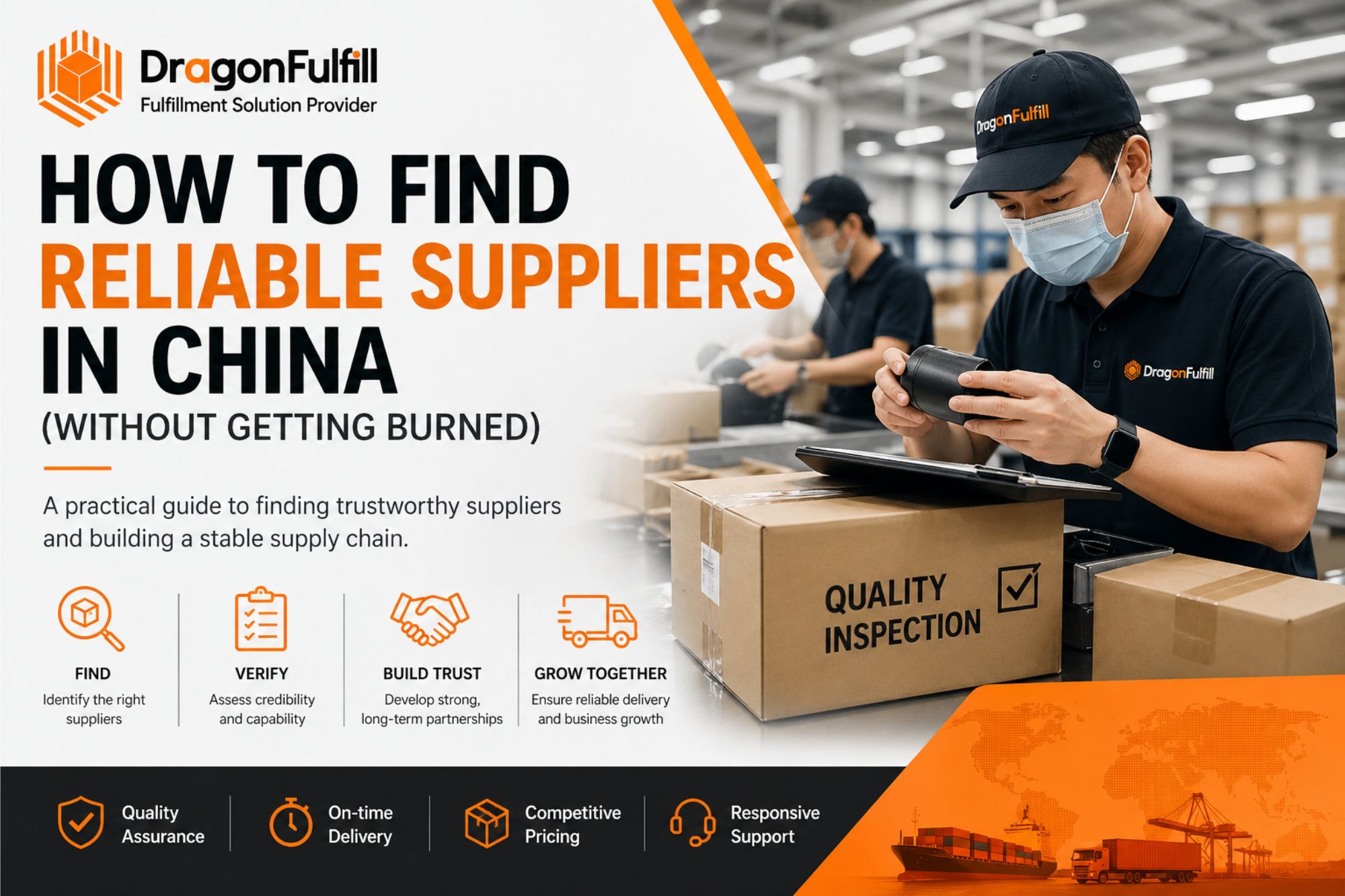
Starting a dropshipping business is easy.
Finding a supplier you can actually rely on—that’s where things usually fall apart.
If you’ve already explored where products are made and how different regions specialize in different categories, this is the next step: turning that understanding into a reliable supply chain.
See how manufacturing regions shape sourcing decisions →
Most sellers don’t fail because of marketing or product choice. They fail because something behind the scenes breaks:
A shipment arrives late.
A product batch is inconsistent.
A supplier suddenly stops responding when something goes wrong.
And by the time these problems show up, it’s often too late to fix them quickly.
The Problem Most People Don’t See
At the beginning, almost every supplier looks good.
They reply quickly.
They offer competitive prices.
They say “yes” to everything.
But reliability isn’t tested when things are easy.
It shows up later—when you start scaling.
When you’re placing larger orders.
When timelines get tighter.
When customers expect consistency.
That’s when the difference between a “supplier” and a reliable partner becomes very real.
Start With Where, Not Who
When you’re in the right production ecosystem, everything becomes easier—communication, pricing, lead time, even product iteration.
If you're still in the early stage of deciding what to sell, it’s worth understanding which product categories are actually supported by strong supply chains.
Explore high-potential products to source from China →
One of the most overlooked mistakes is starting with the question:
“Which supplier should I choose?”
A better question is:
“Am I even sourcing from the right place?”
China’s manufacturing is highly regionalized. Certain areas are simply better at certain products.
Electronics and smart devices tend to cluster around Guangdong.
Home goods are often concentrated in Zhejiang and Shandong.
Pet products are growing rapidly in Hebei and nearby regions.
When you’re in the right production ecosystem, everything becomes easier—communication, pricing, lead time, even product iteration.
When you’re not, problems compound quickly.
Why Price Is Usually a Trap
It’s tempting to compare suppliers based on price.
And in the early stage, that feels logical.
But price rarely tells the full story.
A lower quote often comes with hidden trade-offs:
- weaker quality control
- less reliable shipping
- slower or inconsistent communication
You won’t notice it immediately.
But you will notice it when:
- return rates increase
- customer complaints grow
- delivery timelines become unpredictable
Over time, the “cheapest” supplier often becomes the most expensive one.
What Actually Makes a Supplier Reliable
There isn’t a single factor that defines a good supplier. It’s usually a combination of small things that show up consistently.
Reliable suppliers tend to be:
- clear in communication, even when something goes wrong
- consistent in delivery, not just fast on average
- honest about limitations instead of overpromising
- structured in how they handle orders and issues
One simple way to test this is not by asking what they can do—but how they handle problems.
Because problems will happen.
What matters is how they respond when they do.
The Part Most Sellers Skip: Testing
One of the biggest mistakes is committing too early.
Before placing a larger order, it’s worth slowing down and observing how the supplier actually operates.
Order samples more than once.
Send them to different addresses.
Ask for small adjustments and see how they respond.
You’re not just testing the product.
You’re testing the process behind it.
Where Things Start to Break
At some point, managing suppliers becomes less about sourcing—and more about coordination.
You may be working with:
- multiple factories in different regions
- different shipping methods
- scattered inventory
Individually, each part seems manageable.
Together, they create friction.
This is usually the stage where many sellers feel stuck. Not because they lack demand—but because operations become messy.
A Shift That Happens as You Grow
As businesses scale, the approach to sourcing often changes.
Some teams try to keep everything in-house.
Others begin to simplify their backend by working with partners who can connect sourcing, inventory, and fulfillment into a more structured system.
It’s not about losing control.
It’s about reducing unnecessary complexity.
For example, instead of coordinating across multiple suppliers manually, some sellers choose to work with partners like DragonFulfill to streamline sourcing and make fulfillment more predictable.
Not every business needs that from day one.
But at a certain stage, it becomes less about “finding suppliers”—and more about building a system that can support growth.
Common Mistakes That Keep Showing Up
After working with many dropshipping setups, a few patterns come up repeatedly.
Choosing suppliers purely based on price.
Skipping proper testing before scaling.
Relying on a single supplier without backup.
Trying to grow before operations are stable.
None of these seem critical at first.
But combined, they create fragile systems that break under pressure.
A More Sustainable Way to Approach It
Instead of treating supplier selection as a one-time decision, it helps to think of it as a process.
Start small.
Test thoroughly.
Build consistency.
Then scale.
Some sellers move fast and learn through mistakes.
Others build a more stable foundation from the beginning.
Neither approach is perfect—but the second one usually leads to fewer surprises.
Final Thought
Finding a supplier in China isn’t difficult.
Finding one you can rely on consistently—that’s where the real work is.
Because in the end, your customer doesn’t see your supplier.
They only see the result.
And your business will always reflect the weakest part of your supply chain.
The goal isn’t just to find someone who can make your product.
It’s to build a system that can support your business as it grows.


 English
 Spanish
 Portuguese
 Russian
 German
 Polish