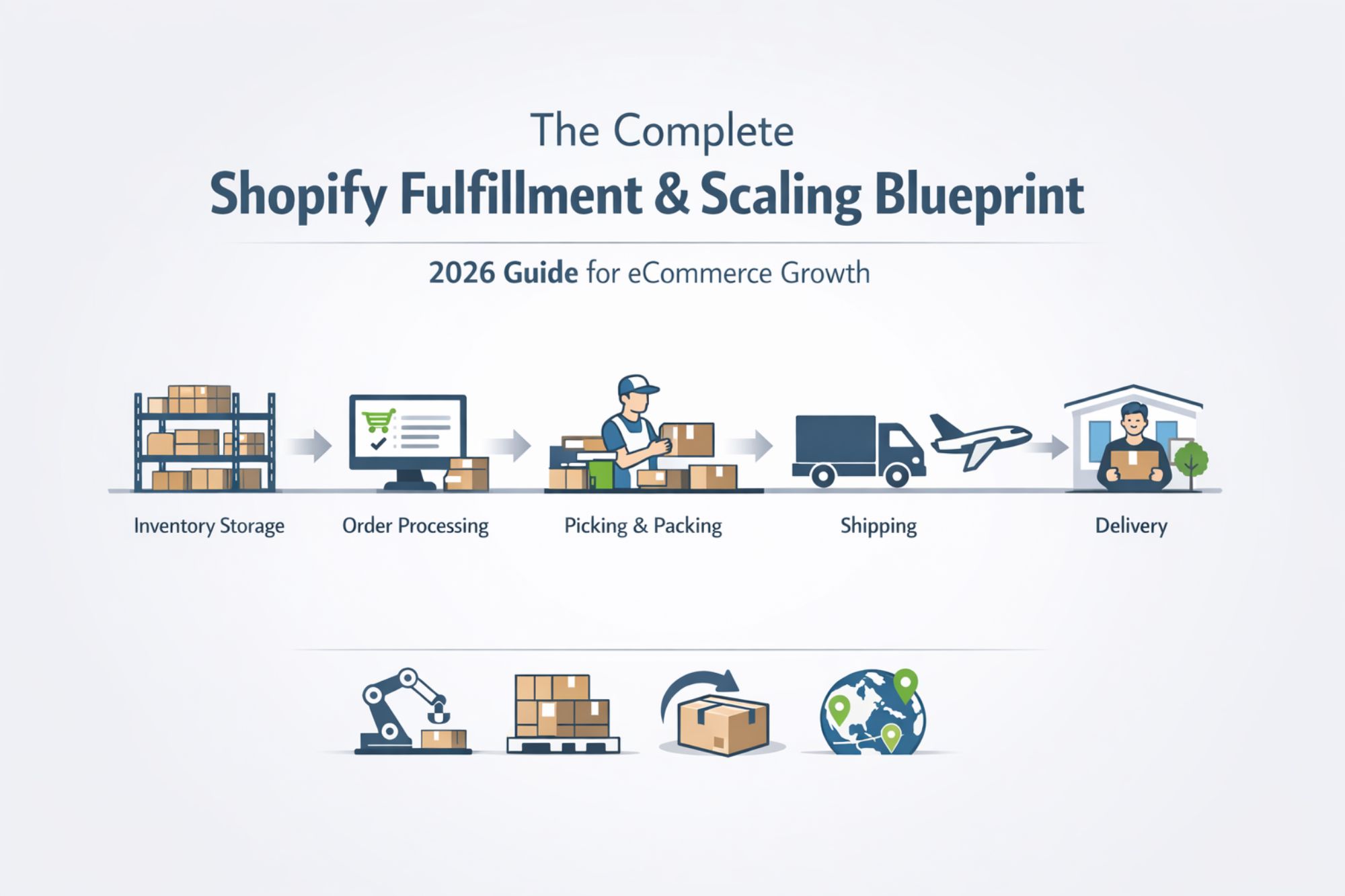
Shopify isn't a testing playground anymore. Advertising costs have skyrocketed, customers demand faster delivery, and competition has gone professional. Yet most sellers still obsess over creatives and trending products while ignoring the operational backbone that actually determines scaling success.
In 2026, the difference between stores that scale past 50 orders daily and those stuck at 10 isn't the product—it's fulfillment infrastructure. Professional Shopify fulfillment combines inventory management, quality control, reliable shipping, automated integration, and compliance systems that transform unstable dropshipping into scalable brand operations.
The brutal truth is that operational excellence separates successful Shopify brands from failed experiments. This blueprint shows you how to build that infrastructure correctly.
Why Do 73% of Shopify Stores Fail at the Scaling Stage?
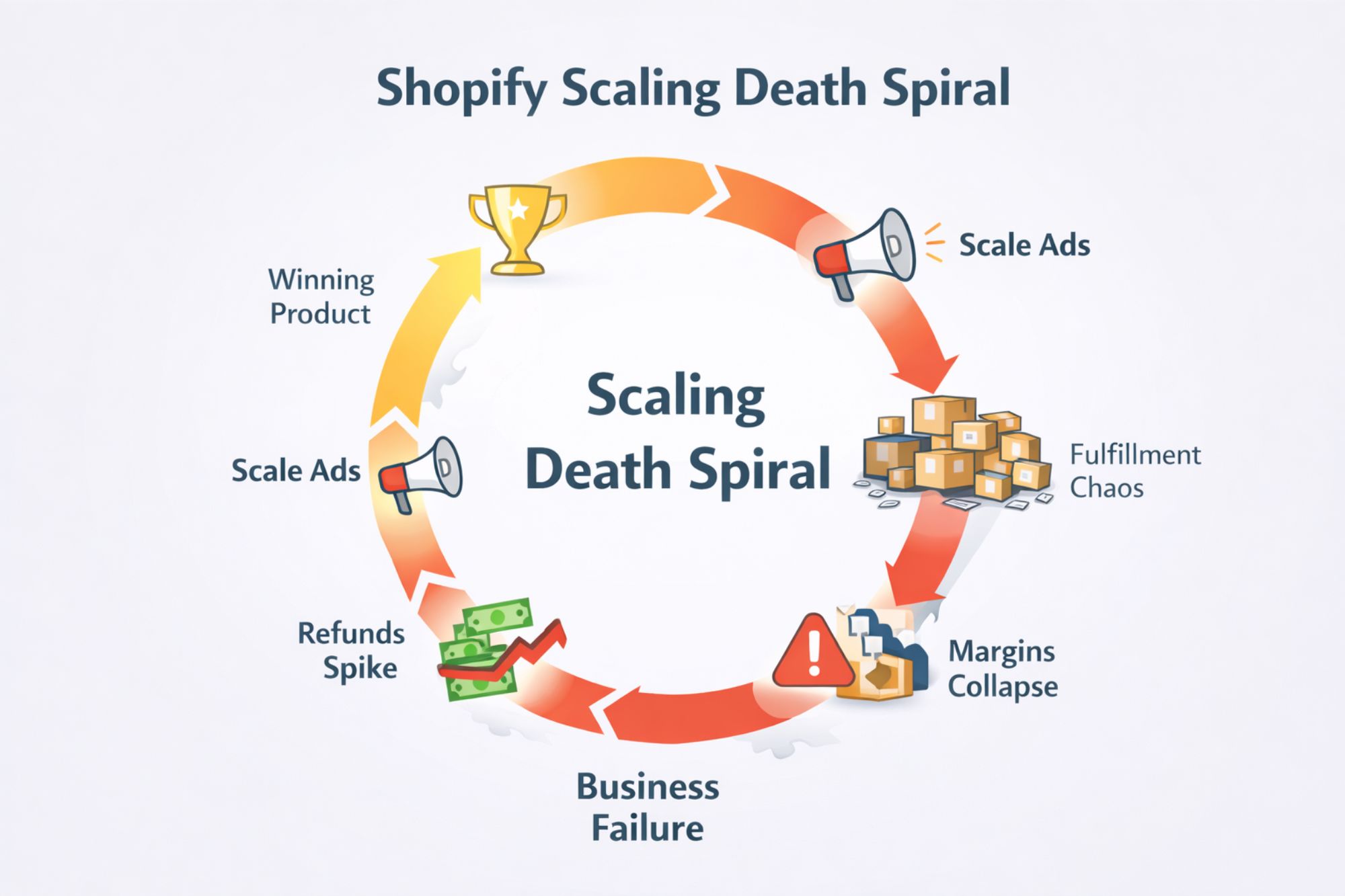
Most Shopify sellers experience an identical cycle that destroys their business before they realize what's happening.
The classic scaling death spiral follows this predictable pattern: find winning product → scale advertising → fulfillment chaos → refunds spike → margins collapse → business failure. This cycle destroys thousands of promising Shopify stores annually because sellers mistake operational problems for marketing problems.
The Four Hidden Scaling Killers
I've analyzed hundreds of failed Shopify operations, and the same four bottlenecks appear repeatedly:
1. Inventory Lag Crisis
Marketplace suppliers rarely hold actual inventory. When your ads start converting, they scramble to restock—creating 7-21 day processing delays that trigger customer complaints and chargebacks. Your winning product becomes a liability overnight.
2. Quality Consistency Breakdown
The sample unit arrives perfect. Bulk production quality varies dramatically. Without systematic inspection, defect rates can jump from 2% to 15% during scaling phases, destroying your customer satisfaction metrics.
3. Shipping Performance Volatility
Standard postal shipping works for testing volumes. At scale, delivery time fluctuations cause refund cascades. Customers who waited 25 days instead of the promised 12 days become your biggest marketing problem through negative reviews and social media complaints.
4. Brand Perception Damage
Unbranded packaging and generic invoices make premium positioning impossible. High-ticket products arrive looking like cheap marketplace orders, eliminating any possibility of building sustainable brand equity or repeat customers.
These aren't marketing problems requiring better creatives. They're structural operational failures that compound exponentially with volume.
What Does Professional Shopify Fulfillment Actually Look Like in 2026?
Professional Shopify fulfillment has evolved far beyond simple pick-and-pack operations into an integrated business system.
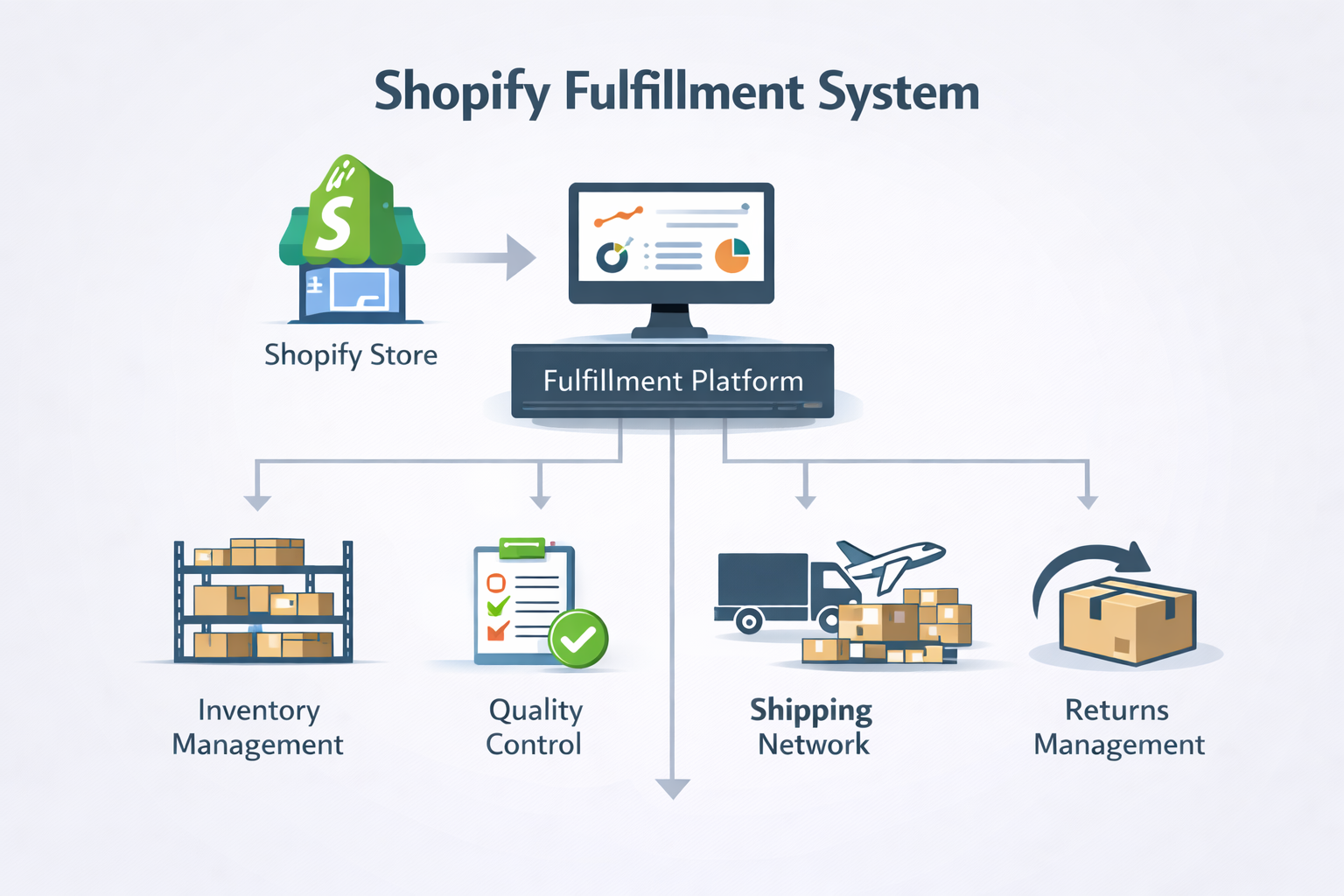
Modern Shopify fulfillment integrates inventory forecasting, systematic quality control, reliable shipping networks, automated platform integration, brand customization capabilities, and regulatory compliance management. It functions as an operational extension of your brand rather than just a shipping provider.
The Six Pillars of Professional Fulfillment Infrastructure
After working with hundreds of scaling Shopify brands, I've identified the six critical components that separate professional operations from amateur setups:
| Component | Amateur Approach | Professional Standard |
|---|---|---|
| Inventory Management | No real-time visibility | AI-powered forecasting with 99% accuracy |
| Quality Control | Random sample checking | Systematic inspection with documented processes |
| Shipping Infrastructure | Cheapest available option | Dedicated shipping lines with performance guarantees |
| Platform Integration | Manual order processing | Automated sync with exception handling |
| Brand Customization | Basic logo placement | Full brand experience design |
| Compliance Management | Reactive problem-solving | Proactive regulatory compliance |
This infrastructure transforms fulfillment from a cost center into a competitive advantage that enables sustainable scaling and premium positioning.
Why the 3-7 Day EU Shipping Standard Has Become Non-Negotiable?
European customer expectations shifted dramatically in 2026, making delivery speed a primary purchase factor rather than a nice-to-have feature.
European buyers now expect 3-7 day delivery as standard service, with deliveries beyond 10 days increasing refund probability by 340%. This expectation shift makes dedicated EU shipping infrastructure essential for sustainable European market penetration.
Why Standard International Shipping No Longer Works for European Markets
The economics of European e-commerce have fundamentally changed:
Customer Behavior Changes:
- 68% of European buyers abandon checkout if delivery exceeds 10 days
- Fast delivery now ranks higher than price in purchase decisions for 45% of customers
- Delivery reliability influences repeat purchase decisions for 72% of buyers
- Social media complaints about slow shipping spread 5x faster than positive reviews
Platform Algorithm Changes:
- Shopify's algorithm now factors shipping speed into organic reach calculations
- Facebook and Instagram ads perform 25-35% better with faster shipping promises
- Google Shopping prioritizes listings with competitive delivery timeframes
- Customer review algorithms weight delivery experience more heavily
Competitive Landscape Evolution:
- Amazon's European expansion set new delivery expectations
- Local European e-commerce platforms offer 2-3 day delivery as standard
- Chinese suppliers with EU warehouses now dominate marketplace listings
- Professional brands consistently outperform slow-shipping competitors
The Infrastructure Required for Consistent EU Delivery
Achieving reliable 6-10 day EU delivery requires systematic infrastructure investments:
-
Dedicated EU Shipping Lines
- Direct partnerships with European logistics providers
- Customs pre-clearance capabilities
- Priority handling agreements
- Real-time tracking integration
-
Strategic Inventory Positioning
- Demand forecasting for popular products
- Buffer stock management
- Seasonal demand planning
- Rapid restocking capabilities
-
Quality Control at Source
- Pre-shipment inspection processes
- Packaging optimization for shipping protection
- Documentation accuracy verification
- Damage prevention protocols
This infrastructure investment typically pays for itself within 60-90 days through improved conversion rates and reduced customer service costs.
How High-Ticket Dropshipping Demands Different Infrastructure?
Products over $150 expose operational weaknesses faster and more expensively than low-ticket items.
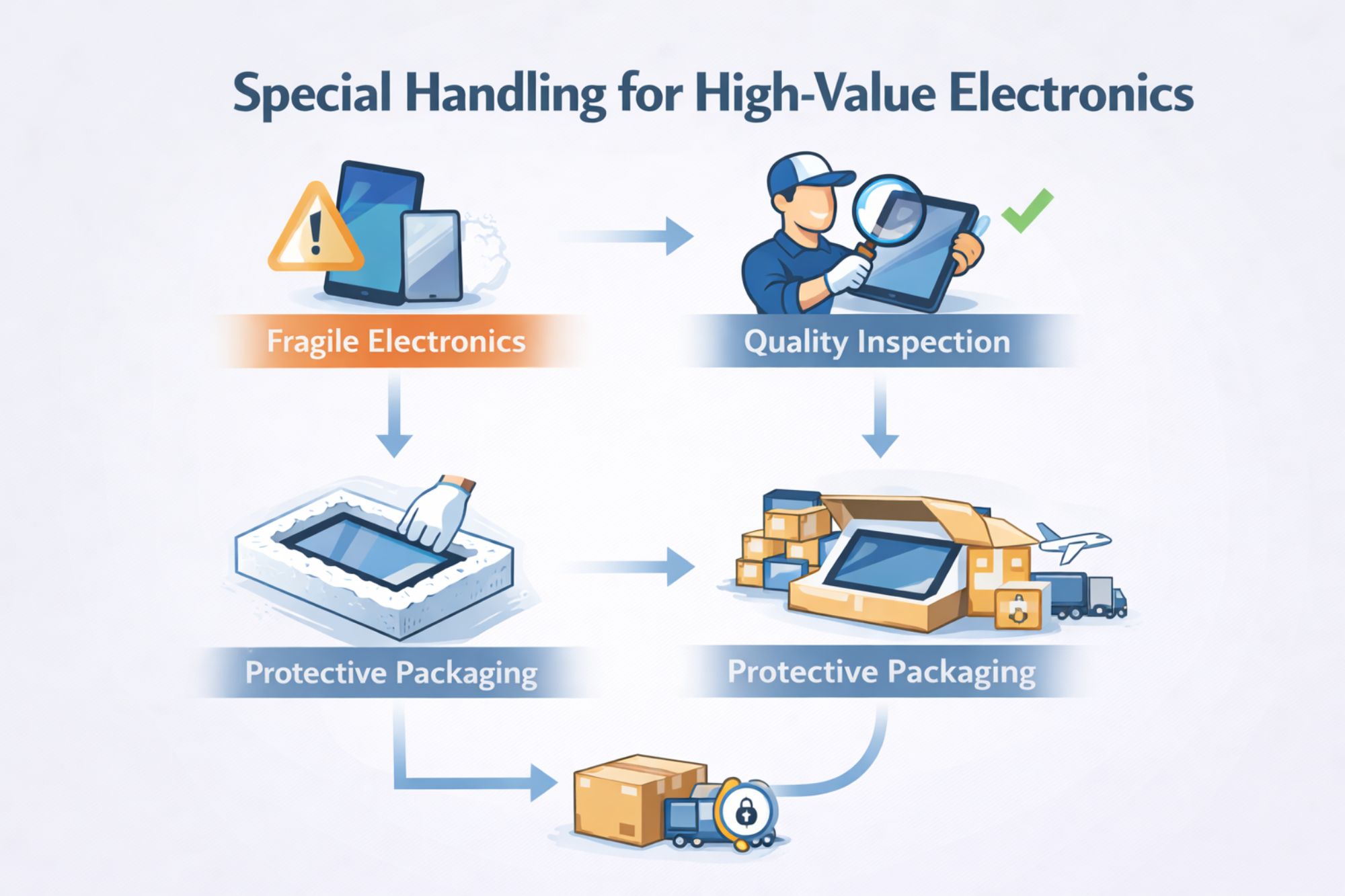
High-ticket dropshipping requires specialized infrastructure because expensive products amplify every operational failure. A shipping delay on a $20 item costs $20 in refunds—the same delay on a $300 item costs $300 plus chargeback fees, customer service time, and reputation damage.
The Four Critical Risk Factors in High-Ticket Operations
1. Return Cost Multiplication
Every operational failure becomes exponentially more expensive:
- Standard return on $30 product: $30 refund + $8 return shipping = $38 loss
- Standard return on $300 product: $300 refund + $25 return shipping + $45 chargeback fee = $370 loss
- Scale these losses across 100 orders and the difference becomes business-threatening
2. Quality Expectation Escalation
Customers spending $200+ expect premium experiences throughout the entire purchase journey:
- Professional packaging that justifies the price point
- Detailed product documentation and warranty information
- Responsive customer service for technical questions
- Hassle-free returns and exchanges when needed
3. Compliance Complexity for Electronics
Electronics and devices require specialized handling that standard dropshipping cannot provide:
- Lithium-ion battery shipping requires dangerous goods certification
- Power-on testing to verify functionality before shipment
- Proper electromagnetic compatibility documentation
- Region-specific power adapters and charging cables
- Customs documentation for electronic imports
4. Fraud and Theft Risk Management
Expensive products attract different types of risk:
- Higher probability of shipping address fraud
- Increased theft risk during transit
- More sophisticated chargeback fraud attempts
- Greater motivation for customers to dispute legitimate charges
Specialized Infrastructure Requirements for High-Ticket Success
Professional high-ticket fulfillment requires capabilities that most standard providers cannot offer:
| Requirement | Standard Fulfillment | High-Ticket Fulfillment |
|---|---|---|
| Quality Testing | Visual inspection only | Power-on testing + functionality verification |
| Packaging Standards | Basic protection | Premium presentation + brand experience |
| Insurance Coverage | Standard postal insurance | Comprehensive coverage + signature confirmation |
| Customer Communication | Tracking number only | Proactive updates + delivery coordination |
| Return Processing | Customer pays return shipping | White-glove return experience |
| Compliance Management | Basic customs forms | Full regulatory documentation |
This specialized infrastructure typically increases fulfillment costs by 15-25% but reduces total operational costs through dramatically lower return and dispute rates.
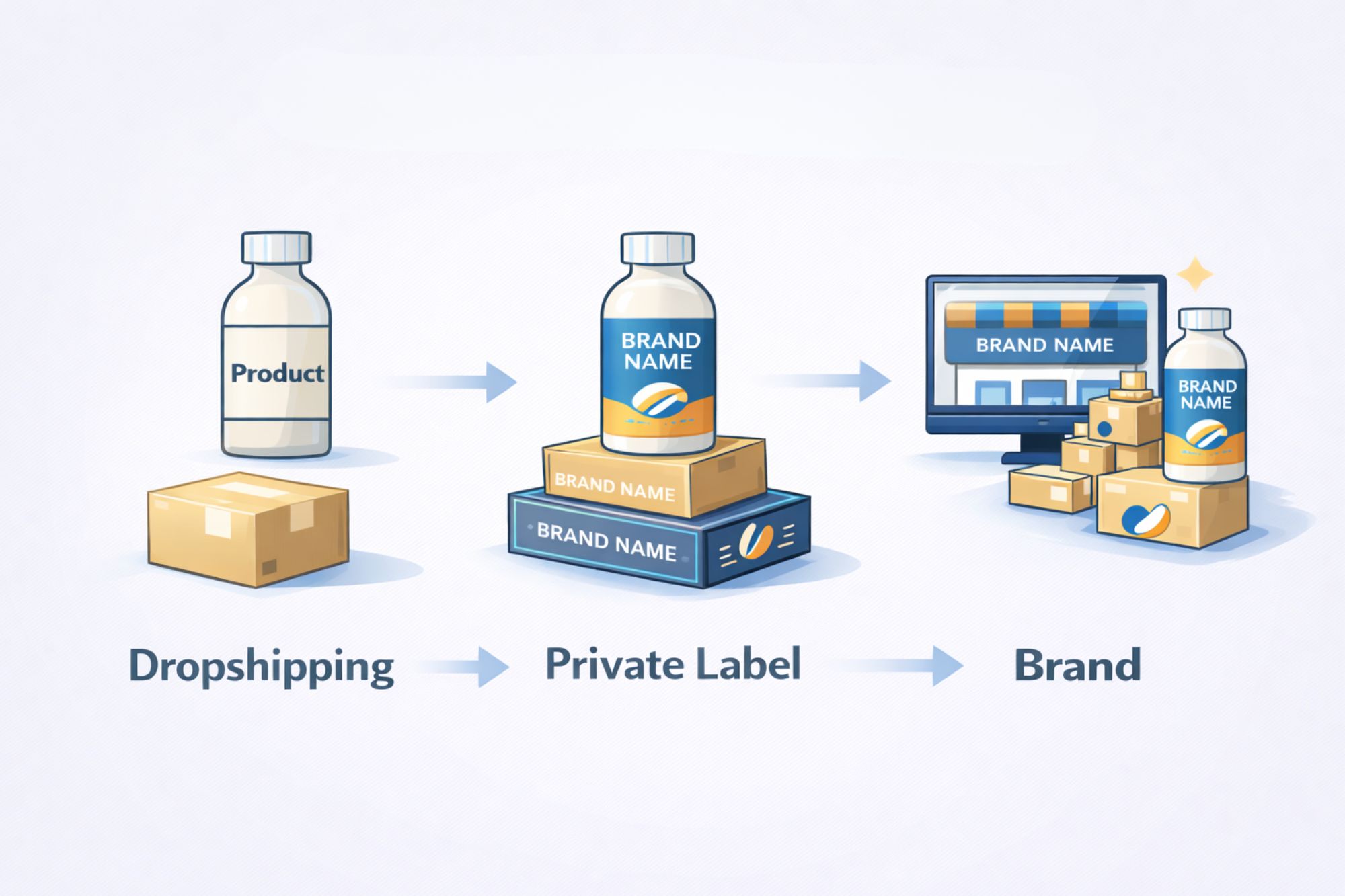
When Should You Upgrade to Private Label Dropshipping?
Most Shopify sellers delay private labeling too long, missing the optimal upgrade window that maximizes brand-building ROI.
The ideal private label transition occurs when daily order volume reaches 30-50 orders with demonstrated product-market fit. This timing maximizes the brand-building investment while minimizing the risk of premature infrastructure spending on unvalidated products.
The Financial Framework for Private Label Decisions
Use this framework to evaluate private label readiness:
Volume Threshold Analysis:
- Minimum 30 daily orders for cost efficiency
- Stable order volume for 45+ consecutive days
- Growth trajectory supporting increased investment
- Advertising spend justifying brand differentiation
Margin Protection Calculation:
- Current gross margin above 35% after all costs
- Private label upgrade cost impact under 8-12% of revenue
- Expected lifetime value increase of 40%+ through branding
- Competitive pricing pressure requiring differentiation
Brand Development ROI:
- Customer acquisition cost trending upward
- Repeat purchase rate indicating brand affinity potential
- Product uniqueness supporting premium positioning
- Market competition requiring differentiation
The Four Stages of Private Label Evolution
Professional private labeling follows a systematic progression:
Stage 1: Basic Brand Integration
- Custom logo placement on products
- Branded packaging tape and stickers
- Simple thank you cards with brand message
- Consistent color scheme across materials
Stage 2: Enhanced Brand Experience
- Custom packaging design reflecting brand values
- Product instruction cards with brand positioning
- Warranty cards building confidence
- Social media integration encouraging sharing
Stage 3: Product Customization
- Custom product colorways exclusive to your brand
- Branded accessories included with main product
- Custom product bundles creating unique offerings
- Exclusive features differentiating from marketplace versions
Stage 4: Full Brand Ecosystem
- Multiple branded product lines working together
- Seasonal packaging variations building anticipation
- Limited edition products creating urgency
- Community building through brand values and mission
Each stage requires increased investment but provides exponentially greater brand protection and customer loyalty.
The 4-Stage Operational Evolution: From Testing to Scaling?
Successful Shopify scaling follows a predictable operational evolution, with each stage requiring specific infrastructure and mindset changes.
Most failed scaling attempts skip operational stages, creating structural weaknesses that collapse under volume pressure. Understanding and properly executing each stage provides the foundation for sustainable growth while minimizing risk exposure.
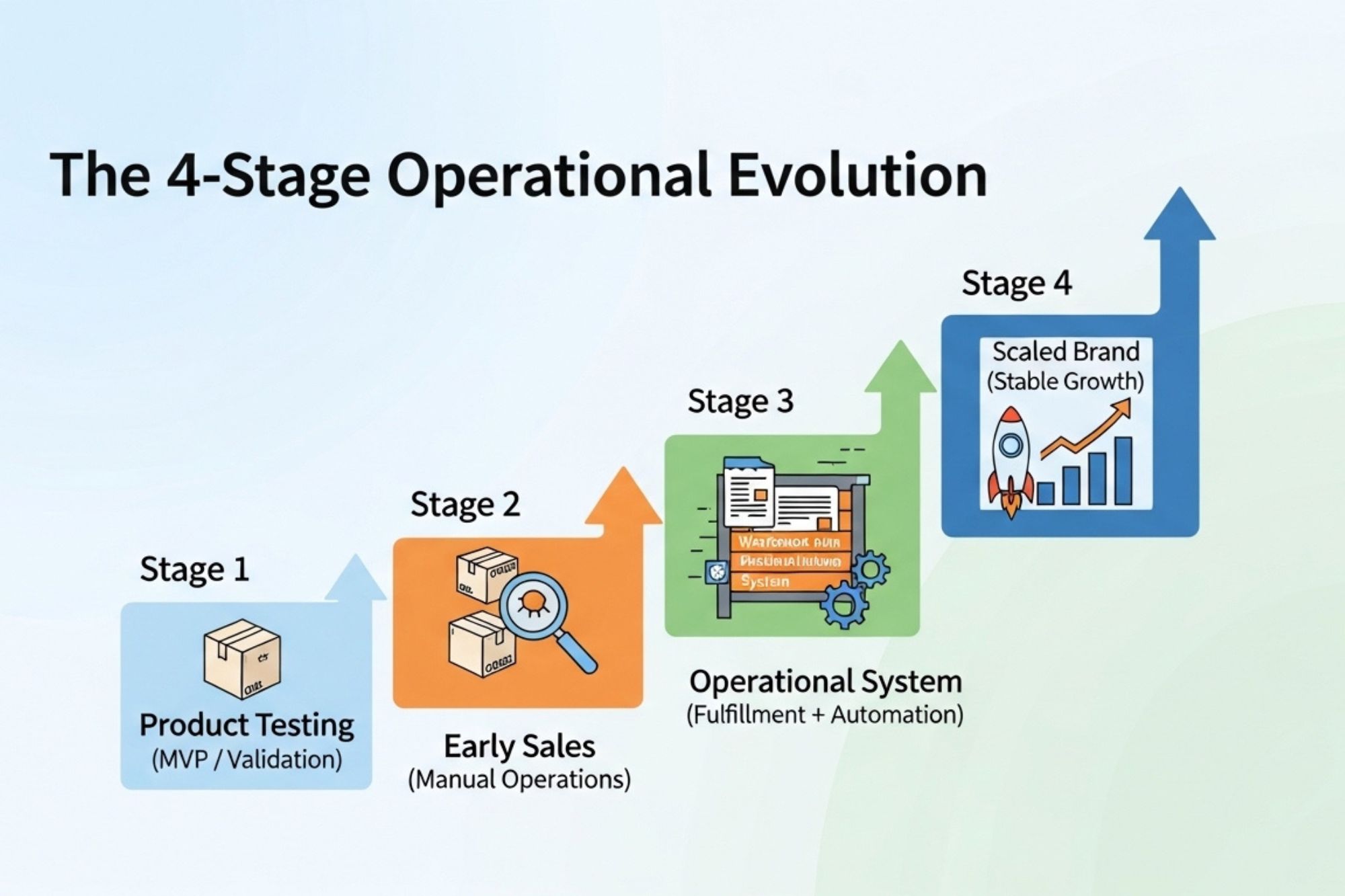
Stage 1: Product Testing Foundation (0-100 orders total)
Primary Objective: Validate product demand with minimal infrastructure investment
Operational Characteristics:
- Marketplace sourcing (AliExpress, CJDropshipping)
- Manual order processing
- Basic shipping (15-25 day delivery acceptable)
- Minimal branding requirements
- Price optimization over experience optimization
Success Metrics:
- Conversion rate above 2% consistently
- Customer complaints below 15%
- Organic repeat purchases occurring
- Advertising break-even achieved
- Product reviews averaging 4+ stars
Critical Transition Signals:
You're ready for Stage 2 when you achieve 20+ daily orders for 7+ consecutive days with stable advertising performance.
Stage 2: Volume Stabilization (100-1,000 orders total)
Primary Objective: Reduce operational volatility while maintaining profitability
Operational Upgrades Required:
- Dedicated supplier relationship establishment
- Basic quality control implementation
- Improved shipping lanes (10-15 day delivery)
- Customer service process documentation
- Inventory visibility systems
Infrastructure Investments:
- Supplier vetting and relationship management
- Quality control sampling protocols
- Customer communication automation
- Basic performance tracking systems
- Problem escalation procedures
Success Metrics:
- Delivery time consistency improving
- Refund rate stabilizing under 8%
- Customer service resolution time decreasing
- Supplier communication response time under 24 hours
- Order processing automation reducing manual work
Critical Transition Signals:
Stage 3 readiness occurs at 50+ daily orders with refund rates under 6% and stable supplier performance.
Stage 3: Brand Development (1,000-5,000 orders total)
Primary Objective: Build brand differentiation and customer loyalty through enhanced experience
Brand Infrastructure Development:
- Custom packaging design and implementation
- Branded insert card development
- Social media integration strategy
- Customer feedback loop creation
- Brand positioning refinement
Enhanced Operational Requirements:
- Quality control systematization
- Packaging presentation optimization
- Customer experience journey mapping
- Brand consistency documentation
- Competitive differentiation establishment
Success Metrics:
- Repeat purchase rate exceeding 25%
- Brand mention in customer reviews increasing
- Social media sharing of unboxing experiences
- Customer acquisition cost stabilizing
- Premium pricing acceptance by customers
Critical Transition Signals:
Stage 4 readiness requires 100+ daily orders with strong brand recognition and sustainable unit economics.
Stage 4: Infrastructure Scaling (5,000+ orders total)
Primary Objective: Build sustainable competitive advantages through operational excellence
Professional Infrastructure Implementation:
- Structured fulfillment partnership
- AI-powered inventory forecasting
- Automated quality control systems
- Advanced shipping optimization
- Comprehensive compliance management
Strategic Capabilities Development:
- Multi-market expansion capability
- Product line extension infrastructure
- Customer lifetime value optimization
- Predictable scaling mechanics
- Risk management systems
Success Metrics:
- Monthly recurring revenue predictability
- Operational efficiency improvements
- Market expansion success rates
- Customer lifetime value growth
- Competitive moat development
This systematic progression ensures each operational upgrade supports the next growth phase while maintaining stability and profitability.
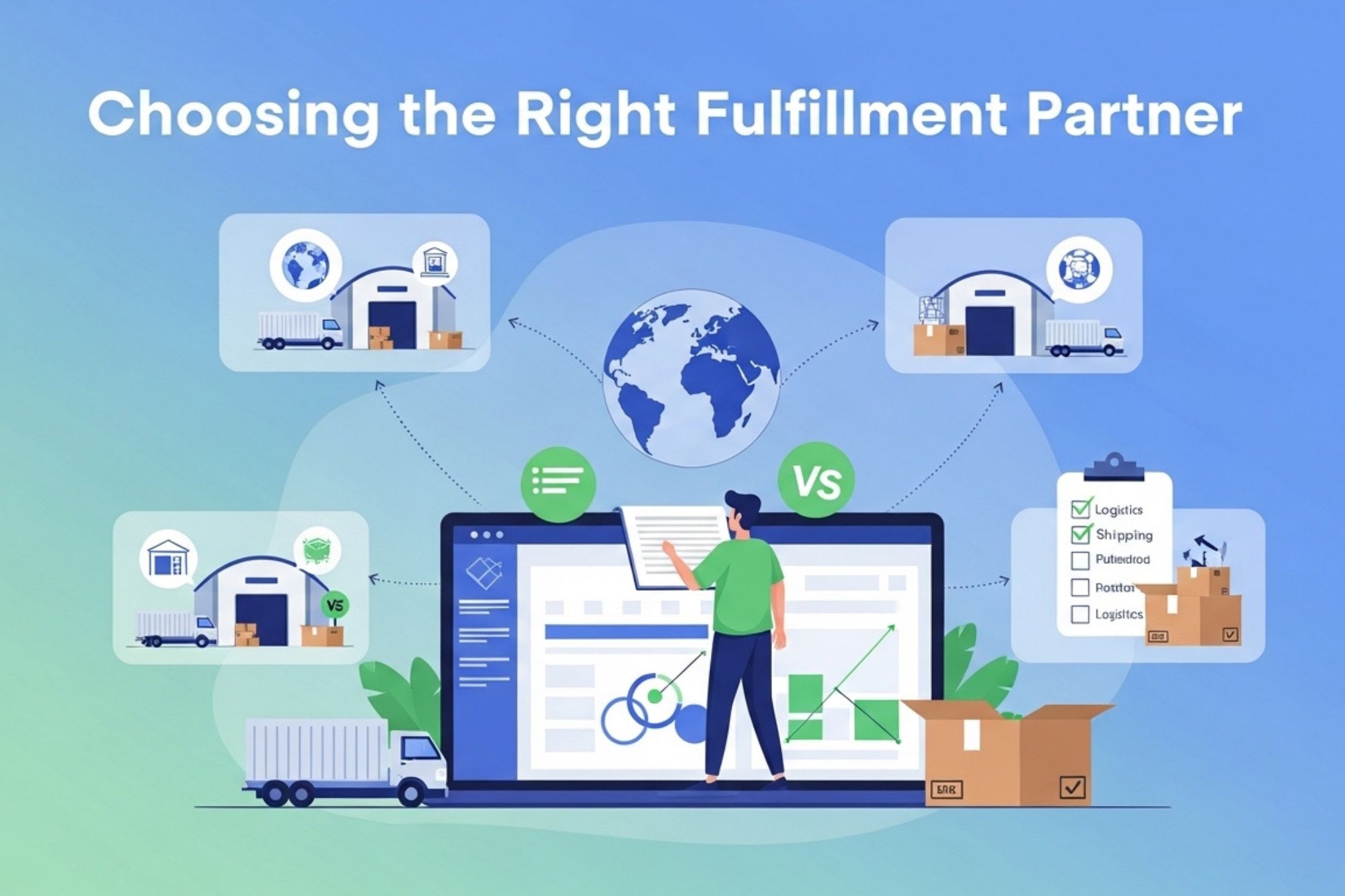
How to Choose the Right Shopify Fulfillment Partner for Long-Term Success?
Selecting a fulfillment partner is one of the most critical business decisions for scaling Shopify brands, yet most sellers evaluate based on wrong criteria.
Professional fulfillment partnerships should be evaluated based on their ability to support your specific growth stage, geographic markets, and brand positioning rather than purely on pricing. The right partner becomes a strategic advantage; the wrong partner becomes an expensive limitation.
The Complete Evaluation Framework for Fulfillment Partners
After helping dozens of Shopify brands transition to professional fulfillment, I've developed this systematic evaluation process:
1. Geographic Coverage and Performance
Evaluate shipping performance to your target markets:
- Consistent delivery times to primary markets (variance under 2 days)
- Dedicated shipping lines vs. standard postal services
- Customs handling expertise for international markets
- Peak season performance maintenance
- Real-time tracking integration with your platform
2. Quality Management Systems
Verify systematic quality control capabilities:
- Documented inspection processes with measurable standards
- Pre-shipment testing protocols for electronics
- Packaging damage prevention measures
- Quality metrics tracking and reporting
- Defect rate guarantees with corrective action plans
3. Technology Integration Capabilities
Assess automation and system compatibility:
- Native Shopify integration with real-time sync
- API capabilities for custom integrations
- Automated order routing and processing
- Inventory management system integration
- Performance analytics and reporting tools
4. Brand Customization Support
Evaluate branding and customization options:
- Custom packaging design capabilities
- Logo placement and brand integration
- Insert card and documentation customization
- Seasonal packaging variations support
- Brand experience consultation services
5. Scalability and Growth Support
Confirm ability to support business growth:
- Capacity for 5-10x volume increases
- Geographic expansion support
- New product introduction processes
- Volume-based pricing transparency
- Strategic growth planning assistance
Red Flags That Indicate Poor Fulfillment Partners
Avoid partners showing these warning signs:
Communication Red Flags:
- Response times exceeding 24 hours consistently
- Language barriers affecting clear communication
- Unwillingness to provide performance guarantees
- Vague answers about capabilities and processes
- Lack of dedicated account management
Operational Red Flags:
- No systematic quality control processes
- Limited shipping line options
- Manual order processing requirements
- Inability to provide performance metrics
- No backup plans for peak seasons or disruptions
Technology Red Flags:
- Outdated integration methods requiring manual work
- No API documentation or technical support
- Limited automation capabilities
- Poor inventory visibility systems
- Lack of real-time performance monitoring
The Partnership Evaluation Process
Follow this systematic approach to evaluate potential partners:
Week 1: Initial Assessment
- Request detailed capability presentations
- Review case studies and client references
- Evaluate technology demonstrations
- Assess communication quality and responsiveness
Week 2: Pilot Testing
- Process small test orders through their system
- Evaluate packaging and quality standards
- Test shipping performance to target markets
- Assess problem resolution capabilities
Week 3: Integration Testing
- Test platform integration functionality
- Verify automation capabilities
- Evaluate reporting and analytics tools
- Confirm scalability for projected volume
Week 4: Final Evaluation
- Compare total cost of ownership across options
- Assess strategic fit with growth plans
- Review contract terms and performance guarantees
- Make final selection based on comprehensive evaluation
This systematic approach prevents costly partnership mistakes while identifying truly strategic fulfillment relationships.
Why Professional Fulfillment Actually Reduces Customer Refund Rates?
Most Shopify sellers blame refunds on product quality or unrealistic customer expectations, missing the operational factors that drive most return requests.
Professional fulfillment reduces refund rates by 40-60% through systematic improvements in delivery consistency, packaging presentation, quality control, and customer communication. These operational improvements address the root causes of customer dissatisfaction rather than just the symptoms.

The Five Root Causes of Fulfillment-Related Refunds
Through analysis of thousands of Shopify orders, these operational factors drive the majority of refund requests:
1. Delivery Expectation Mismatches (35% of refunds)
Customers request refunds when actual delivery times significantly exceed promises:
- Shipping estimates that don't account for processing time
- Seasonal delays not communicated proactively
- Tracking information that doesn't update regularly
- No communication about potential delays
2. Product Condition Issues (28% of refunds)
Poor packaging and quality control lead to customer disappointment:
- Damaged products from inadequate packaging
- Quality variations from inconsistent suppliers
- Missing components or accessories
- Products that don't match listing photos
3. Unboxing Experience Problems (18% of refunds)
Poor presentation creates negative first impressions:
- Unprofessional packaging that suggests low quality
- No brand materials or documentation
- Products arriving loose without protection
- Generic packaging for premium-priced products
4. Communication Gaps (12% of refunds)
Lack of proactive communication creates anxiety:
- No shipping confirmation or tracking information
- No updates about delivery status
- No clear instructions or documentation
- No response to customer inquiries
5. Process Friction (7% of refunds)
Difficult experiences lead to refund requests:
- Complicated return processes
- Unresponsive customer service
- No clear problem resolution procedures
- Defensive responses to legitimate complaints
How Professional Fulfillment Addresses Each Refund Driver
Delivery Consistency Improvements:
- Reliable shipping partners with performance guarantees
- Accurate delivery estimates based on historical data
- Proactive communication about potential delays
- Real-time tracking with automatic customer updates
Quality Control Systematization:
- Pre-shipment inspection protocols for every order
- Quality standards documentation and enforcement
- Supplier performance monitoring and feedback
- Damage prevention through proper packaging
Brand Experience Enhancement:
- Custom packaging reflecting brand values
- Professional presentation increasing perceived value
- Clear documentation and instructions included
- Branded materials building customer confidence
Communication Automation:
- Automatic shipping and tracking notifications
- Proactive delivery updates and problem alerts
- Clear customer service contact information
- Fast response times to customer inquiries
Process Optimization:
- Streamlined returns and exchange procedures
- Clear problem resolution protocols
- Empowered customer service representatives
- Continuous improvement based on feedback
These systematic improvements transform fulfillment from a cost center into a competitive advantage that builds customer loyalty and reduces operational costs.
The True Financial Impact of Operational Excellence on Your Shopify Store?
Most sellers underestimate how operational improvements compound into significant financial advantages across every aspect of their business.
Operational excellence in fulfillment creates a virtuous cycle: better customer experience leads to improved metrics, which enables more efficient advertising, which generates higher profits that can be reinvested in further operational improvements. This compounding effect separates successful brands from struggling stores.

The Measurable Financial Benefits of Professional Fulfillment
After tracking hundreds of Shopify stores through fulfillment upgrades, these improvements are consistently measurable:
| Metric | Before Professional Fulfillment | After Professional Fulfillment | Improvement |
|---|---|---|---|
| Refund Rate | 12-18% average | 4-7% average | 60-70% reduction |
| Customer Lifetime Value | $45-65 average | $85-125 average | 85-90% increase |
| Repeat Purchase Rate | 15-25% | 35-55% | 130-140% increase |
| Ad Performance (ROAS) | 2.5-3.5x | 4.2-6.8x | 65-95% improvement |
| Customer Service Time | 45 min/order issue | 12 min/order issue | 75% reduction |
| Chargeback Rate | 1.2-2.1% | 0.3-0.7% | 70-80% reduction |
How Operational Excellence Enables Advertising Scale
Professional fulfillment directly improves advertising performance through multiple mechanisms:
Customer Feedback Loop Improvements:
- Higher review ratings improve ad platform algorithms
- Better delivery experiences reduce negative social proof
- Satisfied customers create user-generated content
- Reduced complaints improve brand search results
Conversion Rate Optimization:
- Faster shipping promises improve checkout conversion
- Professional brand presentation justifies higher prices
- Customer testimonials become more positive and detailed
- Return policy confidence increases purchase likelihood
Scaling Confidence:
- Predictable fulfillment enables aggressive advertising spend
- Lower refund rates improve cash flow predictability
- Operational reliability supports higher advertising budgets
- Better customer experience enables premium positioning
The Long-Term Competitive Advantages
Professional fulfillment creates sustainable competitive advantages that advertising optimization alone cannot achieve:
Brand Equity Development:
- Consistent quality builds customer trust over time
- Professional experience creates emotional connection
- Word-of-mouth marketing reduces customer acquisition costs
- Brand recognition enables product line extensions
Market Position Strengthening:
- Higher customer satisfaction creates review advantages
- Better delivery experience beats price-only competitors
- Professional positioning attracts higher-value customers
- Operational reliability enables premium pricing
Business Model Sustainability:
- Predictable operations enable long-term planning
- Higher margins provide investment capacity
- Customer loyalty reduces dependence on advertising
- Professional infrastructure supports team expansion
These advantages compound over 12-24 months, creating businesses that competitors cannot easily replicate through marketing tactics alone.
How DragonFulfill Specifically Supports Scaling Shopify Brands?
After working with hundreds of Shopify sellers, I've designed DragonFulfill specifically to address the operational bottlenecks that prevent sustainable scaling.
DragonFulfill bridges the gap between amateur dropshipping and professional e-commerce operations through specialized infrastructure designed for Shopify brands targeting European and global markets. Our focus is eliminating the operational chaos that destroys promising stores during scaling phases.
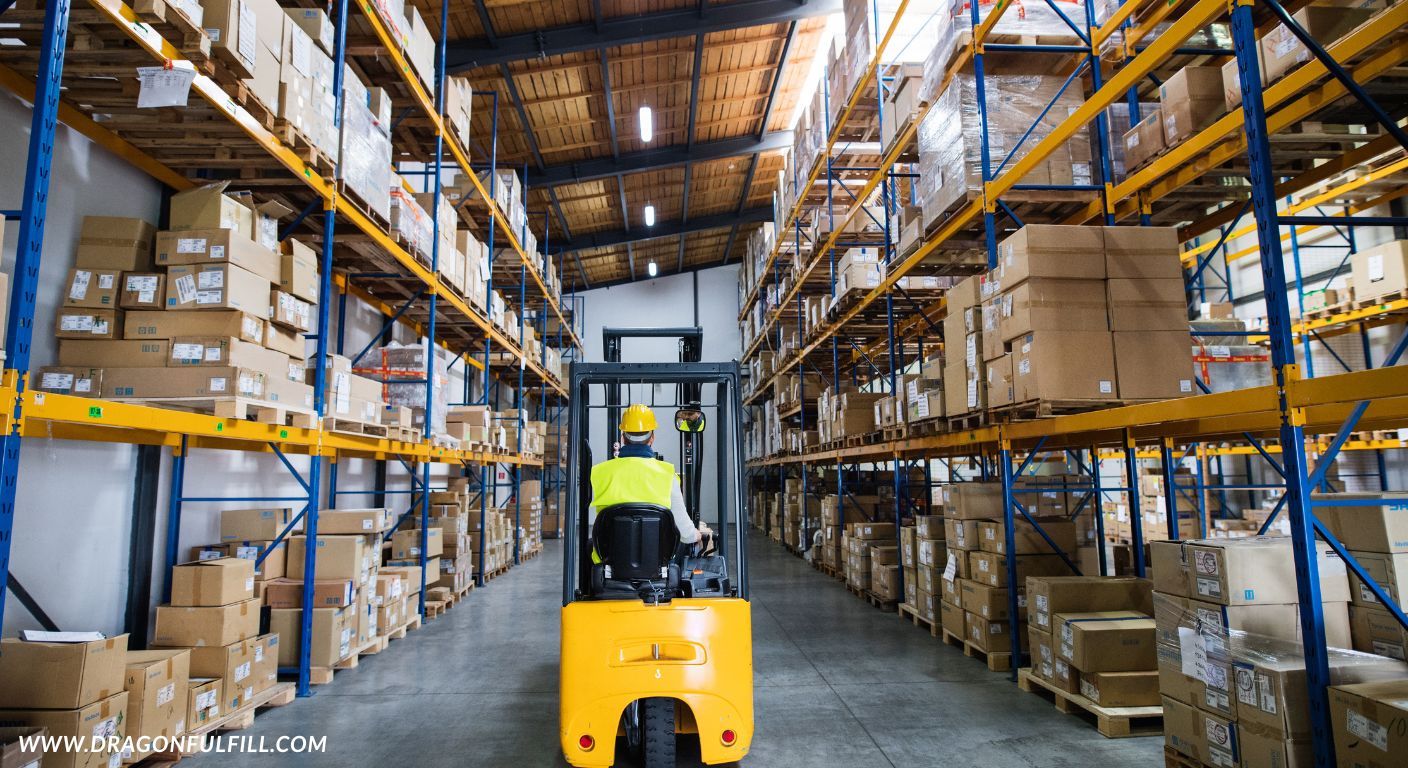
Specialized Infrastructure for Shopify Success
Dedicated European Shipping Lines
We've invested heavily in shipping partnerships that deliver consistent 6-10 day performance to European markets:
- Direct partnerships with European logistics providers
- Customs pre-clearance reducing delay risk
- Priority handling during peak seasons
- Real-time tracking integration with Shopify
Electronics and Battery Expertise
Our team specializes in the compliance requirements that trip up most dropshippers:
- DG-certified lithium-ion battery shipping
- Power-on functionality testing before shipment
- Proper electromagnetic compatibility documentation
- Region-specific adapter and cable inclusion
Quality Control Systems
Every product goes through systematic inspection designed for e-commerce requirements:
- Visual inspection for damage and defects
- Functionality testing for electronic products
- Packaging presentation optimization
- Brand consistency verification
Shopify Integration Excellence
Our platform integrates directly with Shopify for seamless operations:
- Real-time order sync with automatic processing
- Inventory level updates preventing stockouts
- Tracking information automatically sent to customers
- Exception handling with notification systems
Volume-Based Pricing That Supports Growth
Our pricing structure is designed to reward growth rather than penalize it:
| Monthly Volume | Product Sourcing | Fulfillment Fee | Shipping Rate |
|---|---|---|---|
| 0-100 orders | Market rate + 8% | $3.50/order | $4.50 EU |
| 100-500 orders | Market rate + 5% | $2.80/order | $3.90 EU |
| 500-1000 orders | Market rate + 3% | $2.20/order | $3.40 EU |
| 1000+ orders | Market rate + 2% | $1.80/order | $2.90 EU |
This structure ensures that as you scale, your per-unit costs decrease, protecting margins during growth phases.
Brand Development Support
We provide comprehensive branding capabilities that transform generic dropshipping into professional brand experiences:
- Brand-consistent packaging reflecting your values
- Seasonal variations building anticipation
- Unboxing experiences optimized for social sharing
- Sustainable packaging options meeting environmental standards
Private Label Integration
- Logo placement and brand integration
- Custom insert cards with brand messaging
- Product bundling creating unique offerings
- Exclusive colorways and accessories
Documentation and Compliance
- Professional product documentation
- Warranty cards building customer confidence
- Regulatory compliance for electronic products
- Return instructions and customer service information
Strategic Partnership Approach
Rather than just processing orders, we function as a strategic partner supporting your long-term success:
Growth Planning Support
- Inventory forecasting based on your advertising plans
- Capacity planning for seasonal volume spikes
- New product introduction guidance
- Market expansion logistics support
Performance Optimization
- Monthly performance reviews with improvement recommendations
- Cost optimization suggestions based on volume analysis
- Quality improvement feedback loops
- Shipping performance monitoring and enhancement
Problem Resolution
- Dedicated account management for established accounts
- 24-hour response time guarantees
- Proactive problem identification and resolution
- Continuous improvement based on your feedback
This partnership approach ensures your fulfillment infrastructure supports rather than constrains your growth ambitions.
Ready to Transform Your Shopify Store into a Scalable Brand?
If your store has moved beyond the product testing phase and you're ready to build sustainable competitive advantages, your fulfillment infrastructure needs to evolve accordingly.
The transition from amateur dropshipping to professional fulfillment typically becomes necessary when processing 25+ orders daily with validated product-market fit. At this point, operational limitations become more expensive than infrastructure investments.

Is Your Store Ready for Professional Fulfillment Infrastructure?
Consider upgrading when you experience:
- Consistent daily order volume above 25 with growth trajectory
- Customer complaints about delivery times or packaging presentation
- Refund rates above 8% despite good product-market fit
- Difficulty scaling advertising due to operational constraints
- Competition from faster-shipping alternatives
- Desire to build brand equity rather than just selling products
Taking the Next Step
To evaluate whether DragonFulfill aligns with your current business stage and growth objectives:
- Product Assessment: Upload your current product images to our sourcing platform for accurate pricing and shipping estimates
- Volume Analysis: Review our pricing tiers against your current and projected order volumes
- Infrastructure Evaluation: Assess our shipping performance against your customer expectations
- Growth Planning: Discuss how professional fulfillment supports your 12-month scaling objectives
The difference between stores that scale successfully and those that stagnate isn't usually the product or the marketing—it's the operational foundation that supports sustainable growth while maintaining customer satisfaction.
Professional fulfillment infrastructure transforms promising Shopify experiments into scalable brands capable of building lasting customer relationships and sustainable competitive advantages.
Your success depends not just on what you sell, but how reliably and professionally you deliver on your promises. Make sure your operations match your ambitions.
Conclusion
Professional Shopify fulfillment has become the decisive factor separating successful brands from failed experiments in 2026's competitive landscape.

 English
  Spanish
  Portuguese
  Russian
  German
  Polish