
Starting a dropshipping business is easy. Finding a reliable supplier that won't ruin your brand? That's where most sellers fail.
Your choice of dropshipping supplier directly determines your business success. Research shows that 78% of successful dropshippers in 2026 attribute their growth to finding the right supplier partner, while 71% of failed stores cite supplier issues as their primary reason for closing.
I've helped hundreds of dropshippers transform their businesses by upgrading their supplier relationships. The difference between struggling stores and thriving ones almost always comes down to supply chain reliability - not marketing tactics or product selection.
What Is A Dropshipping Supplier And Why Are They Your Most Critical Partner?
A dropshipping supplier isn't just a vendor - they're the invisible engine of your entire business operation.
The right supplier handles inventory storage, product packaging, direct shipping to customers, and real-time stock updates without requiring upfront inventory purchases. This partnership structure is what makes dropshipping possible, but it also creates significant dependency on your supplier's performance.
The Brutal Truth About Supplier Dependency
Your supplier is far more than a service provider - they're your actual business partner. When evaluating the importance of this relationship, consider the direct impact on your customers:
When your supplier excels:
- Orders arrive quickly and intact
- Products match descriptions perfectly
- Customers receive consistent quality
- Your brand reputation grows
- Repeat purchases increase
When your supplier fails:
- Shipping delays frustrate customers
- Poor quality products arrive damaged
- Wrong items get shipped
- Refund requests flood your inbox
- Chargebacks damage your payment processing
- Your brand reputation collapses—even if it's not your fault
I witnessed this firsthand with a client whose store went from $80K/month to nearly shutting down in just 45 days because their supplier started cutting corners on quality and shipping. By the time they switched suppliers, the damage to their customer relationships required months to repair.
The stark reality is that your business is only as reliable as your weakest supplier. That's why supplier selection is the most critical decision you'll make in your dropshipping journey.
Where Do Professional Dropshippers Find Reliable Suppliers?
After working with hundreds of dropshipping operations, I've identified four main sourcing channels, each suited to different business stages.
The supplier landscape operates as a progression ladder, with most successful dropshippers moving up through these channels as their business grows and their requirements become more sophisticated.
1. Open Marketplaces: The Starting Point
Examples:
- AliExpress
- Alibaba
- CJdropshipping
- DHgate
- Спокет
These platforms provide the lowest barrier to entry for new dropshippers, but come with significant limitations in 2026:
| Pros | Cons |
|---|---|
| Easy to start with no technical requirements | Slow shipping (12-35 days typical) |
| No minimum order quantities (MOQ) | Inconsistent product quality |
| Massive product variety for testing | No branding capabilities |
| Simple order processing | Limited automation possibilities |
| Низкие начальные инвестиции | High competition on identical products |
| AI-powered product discovery tools | Rising costs due to platform fees |
I recommend open marketplaces exclusively for beginners who are testing products and concepts. Once you're processing even 5-10 orders daily, the limitations become significant barriers to growth.
2. Private Dropshipping Agents (China-Based): The Growth Stage
This is where more serious sellers migrate when they've validated product demand and need better operational support.
A private agent typically:
- Sources products directly from factories
- Consolidates orders for efficiency
- Performs basic quality inspection
- Ships faster (5–8 days average to Europe, 7-10 days to US)
- Can add private labeling and basic branding
- Communicates directly about issues
- Offers AI-powered inventory optimization
The transition to a private agent usually happens when sellers reach 15-30 orders per day and need more reliability than marketplaces can provide.
3. Fulfillment Companies: The Scalable Business Model
This represents a significant upgrade from both marketplaces and private agents. A true fulfillment partner provides comprehensive services:
- Strategic product sourcing and supplier management
- Professional warehousing with inventory management
- Rigorous quality control systems
- Custom brand packaging capabilities
- Advanced API integration with Shopify and other platforms
- Automatic order fulfillment with AI routing
- Returns handling and resolution
- Predictive analytics for demand planning
If you plan to build a sustainable business beyond the testing phase, this model provides the stability and scalability required. Most sellers making $15,000+ monthly eventually migrate to this model.
4. Local or Domestic Suppliers: The Premium Approach
US or EU based suppliers offer significant advantages for certain business models:
- Ultra-fast shipping (1–3 days typically)
- Simpler returns processing
- Higher perceived value by customers
- Better regulatory compliance
- Carbon footprint considerations increasingly important to consumers
These benefits come with 25-40% higher costs, making this approach viable primarily for premium products with higher profit margins.
How To Evaluate Dropshipping Suppliers Like A Professional
There is no universal "best supplier" - the right supplier depends entirely on your specific business needs, target market, and growth stage.
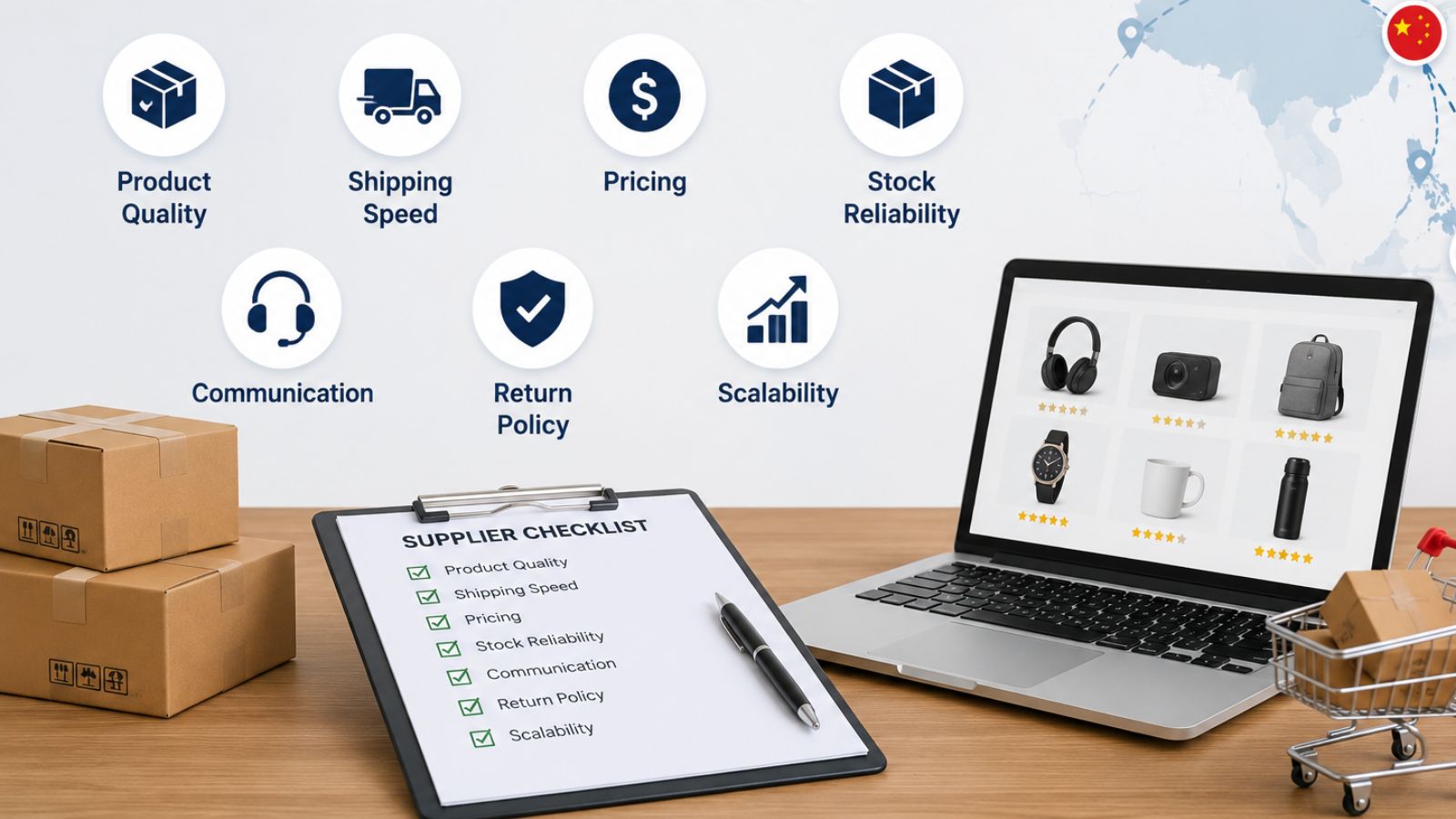
When evaluating potential suppliers, experienced dropshippers in 2026 focus on seven critical factors that directly impact customer satisfaction and operational efficiency.
1. Shipping Speed And Reliability
Shipping performance has the most direct impact on customer satisfaction. Target these benchmarks for 2026:
| Target Market | Competitive Shipping Time | Premium Shipping Time |
|---|---|---|
| Европа | 4-10 days | 3-7 дней |
| United States | 6-15 days | 7-10 days |
| Canada | 6-15 days | 7-10 days |
| Australia | 5-12 days | 7-9 days |
| UAE/Middle East | 5-7 дней | 3-6 days |
Even more important than average delivery time is consistency. A supplier that delivers 95% of packages in 6-8 days is far better than one that delivers 50% in 4 days and 50% in 18 days.
Ask potential suppliers:
- What percentage of orders arrive within your stated timeframe?
- What happens when shipments are delayed?
- Do you offer tracking for all packages?
- How do you handle lost packages?
- What's your performance during peak seasons?
2. Communication Quality And Responsiveness
Communication breakdowns lead directly to customer service problems. Evaluate:
- Response time (12 hours maximum, 6 hours ideal)
- English communication clarity
- Problem-solving attitude versus excuse-making
- Transparency about limitations and challenges
- Availability during your working hours
- Use of modern communication tools (WhatsApp, Telegram, etc.)
I recommend conducting a "test problem" by asking how they would handle a specific shipping or product issue. Their response reveals more about the working relationship than any sales promises.
3. Product Consistency And Quality Control
Product consistency directly impacts your return rate and customer satisfaction. Request:
- Factory photos and production videos
- Multiple sample orders over time (not just one)
- Their formal QC process documentation
- Defect rate statistics (should be under 2%)
- Examples of rejected products
- AI-powered quality inspection capabilities
The best suppliers will proudly share their quality control processes because they're a competitive advantage.
4. Technology Integration Capabilities
In 2026, automation is no longer optional for scaling dropshipping businesses. Verify:
- Direct integration with your e-commerce platform (Shopify, WooCommerce, etc.)
- API availability for custom integrations
- AI-powered order routing and optimization
- Real-time inventory synchronization
- Automated tracking updates
- Predictive analytics for demand planning
Without proper automation, scaling beyond 20-30 daily orders becomes extremely painful and error-prone.
5. Branding And Customization Options
As your business grows, branded experiences become increasingly important for customer retention. Verify their capabilities for:
- Adding your logo to products
- Creating custom packaging with sustainable materials
- Including branded inserts and thank you cards
- Special unboxing experiences
- Product bundling options
- Private labeling capabilities
Request physical samples of their branding work for other clients (with permission) to evaluate quality firsthand.
6. Sustainability And Compliance
Environmental consciousness has become a significant factor for consumers in 2026. Evaluate:
- Carbon-neutral shipping options
- Sustainable packaging materials
- Factory environmental certifications
- Product compliance with latest regulations
- Waste reduction programs
- Circular economy initiatives
These factors increasingly influence customer purchase decisions and brand loyalty.
7. Scalability And Growth Support
Your supplier should be able to grow with your business. Discuss:
- Capacity during peak seasons (November-December)
- Volume discount structures
- New product development capabilities
- Additional services available as you grow
- Their current largest client volume
- AI-powered demand forecasting
Outgrowing your supplier creates significant operational disruption, so choosing one with headroom for your growth is essential.
Where Does Inventory Come From In Dropshipping?
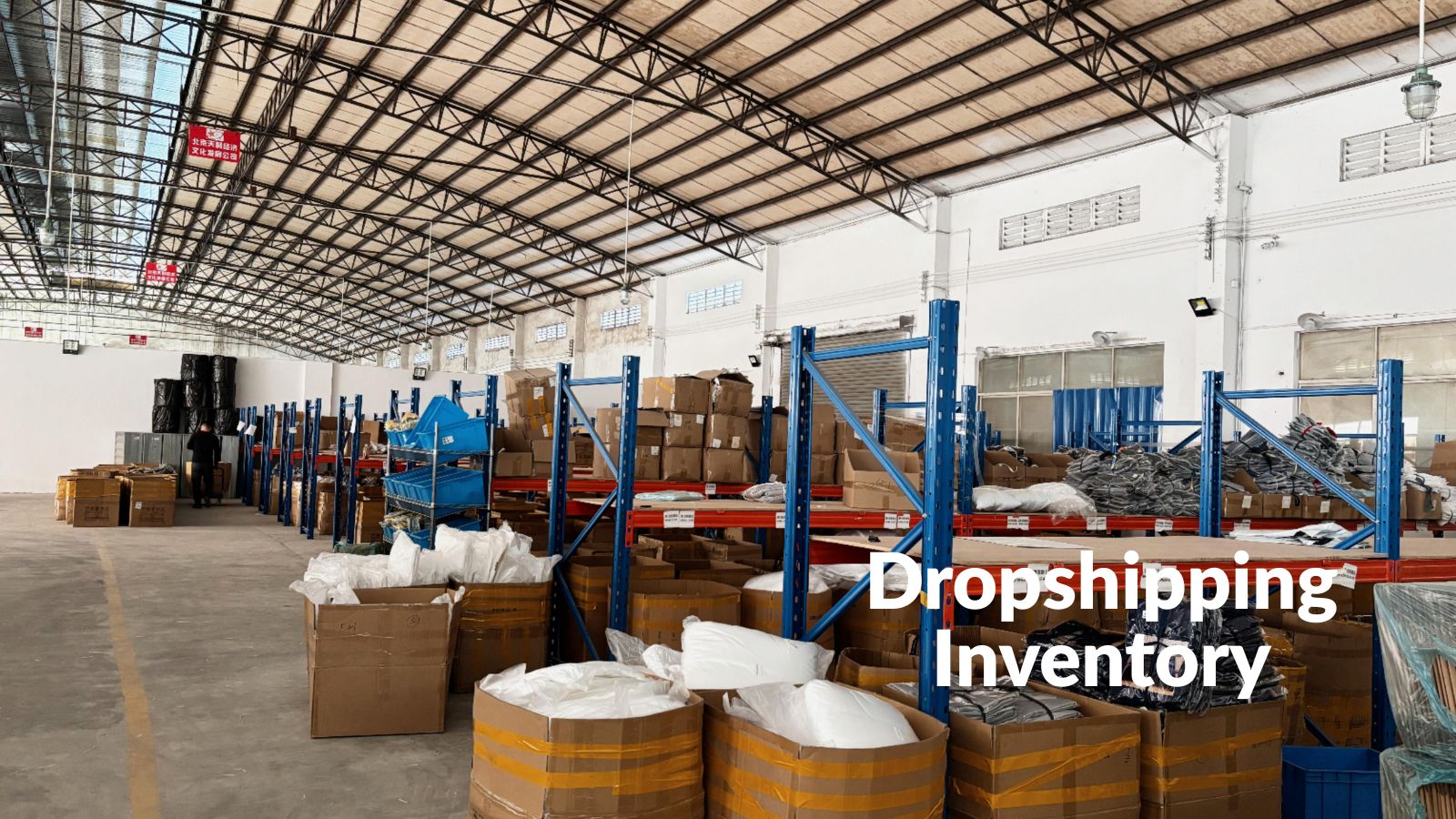
Despite common misconceptions, dropshipping still involves real physical inventory - you're just not paying for it upfront.
Understanding inventory sources and storage options helps you make strategic decisions about supplier relationships and fulfillment models as your business grows.
The Five Main Inventory Storage Models in 2026
Factory Direct Warehouse
- Products ship directly from the manufacturing facility
- Lowest cost but highest risk of delays
- Limited quality control
- Typical for marketplace orders
Agent Consolidated Warehouse
- Products from multiple factories stored at agent's facility
- Moderate cost with improved handling
- Basic quality checks possible
- Common for private agent relationships
Dedicated Fulfillment Warehouse
- Professional storage with inventory management systems
- Systematic quality control procedures
- Faster processing and specialized packaging
- Used by established fulfillment companies
Overseas Warehouse (EU/US/etc.)
- Inventory pre-positioned in target market
- Highest cost but fastest delivery (1-3 days)
- Easiest returns processing
- Ideal for high-value or fast-moving products
Hybrid Smart Warehouses (New in 2026)
- AI-powered inventory positioning
- Dynamic stock allocation based on demand prediction
- Automated quality control with machine vision
- Real-time optimization across multiple locations
Most scalable dropshipping businesses now use hybrid models, leveraging AI to optimize inventory placement across multiple warehouse locations for the best combination of cost and speed.
Essential Preparation Before Contacting Dropshipping Suppliers
Suppliers take you more seriously when you demonstrate preparation and business clarity. Before making initial contact, have these elements clearly defined:
Professional suppliers prioritize prepared sellers who present clear business plans. Taking time to develop these six key areas significantly increases your chances of securing favorable supplier relationships.
1. Clear Niche Definition
Successful dropshipping requires focus. Define:
- Specific product category
- Target customer demographic
- Price positioning (budget, mid-range, premium)
- Competitive differentiation
- Sustainability positioning (increasingly important in 2026)
General stores struggle to build supplier relationships because their requirements are too scattered. Focused brands convert better and are taken more seriously by quality suppliers.
2. Target Market Specification
Different markets have vastly different requirements. Specify:
- Primary country/region targets (US, Western Europe, etc.)
- Secondary markets if applicable
- Shipping time expectations for each market
- Any regulatory requirements (CE marking, FDA approval, etc.)
- Local compliance needs (GDPR, consumer protection laws)
This clarity helps suppliers immediately determine if they can meet your needs.
3. Profit Margin Framework
Understand your numbers before negotiation. Calculate:
- Target product cost
- Acceptable shipping cost
- Payment processing fees (2-4%)
- Platform fees (if applicable)
- Marketing cost per acquisition (now 40-60% higher than 2024)
- Desired profit margin
Sustainable dropshipping businesses in 2026 typically require a minimum 30-40% margin after all costs to support growth.
4. Returns and Customer Service Strategy
Determine handling for:
- Defective items
- Shipping damage
- Lost packages
- Customer changed mind
- Wrong item shipped
- Environmental return programs
Clarify whether you expect suppliers to cover replacement costs for their errors and how returns will be processed.
5. Growth Projection Plan
Suppliers invest more in relationships with growth potential. Prepare:
- Current daily order volume
- 30-day growth projection
- 90-day growth projection
- Seasonal expectations
- Marketing investment plans
- Expansion market timeline
Even if you're just starting, outlining your growth strategy signals business seriousness.
6. Technology and Integration Requirements
In 2026, technical capabilities are essential. Define:
- E-commerce platform used
- Required integrations
- Automation level needed
- Reporting requirements
- AI capabilities desired
This helps suppliers assess their technical compatibility with your business needs.
Professional Communication Templates For Contacting Suppliers
Your initial communication sets the tone for the entire business relationship. These templates have proven effective for establishing professional supplier relationships in 2026.
The way you communicate with potential suppliers directly impacts the quality of service you'll receive. Professional communication that demonstrates business acumen receives priority treatment and better terms.
These templates position you as a serious business owner rather than a casual reseller, significantly improving your chances of securing favorable terms and priority attention.
The 7-Step Product Sourcing Framework Used By Professional Dropshippers
This systematic approach to product sourcing has been refined through work with hundreds of successful dropshipping businesses and updated for 2026 market conditions.
Following a structured sourcing framework prevents costly mistakes and builds a more resilient supply chain. This process separates professional dropshipping businesses from amateur operations.
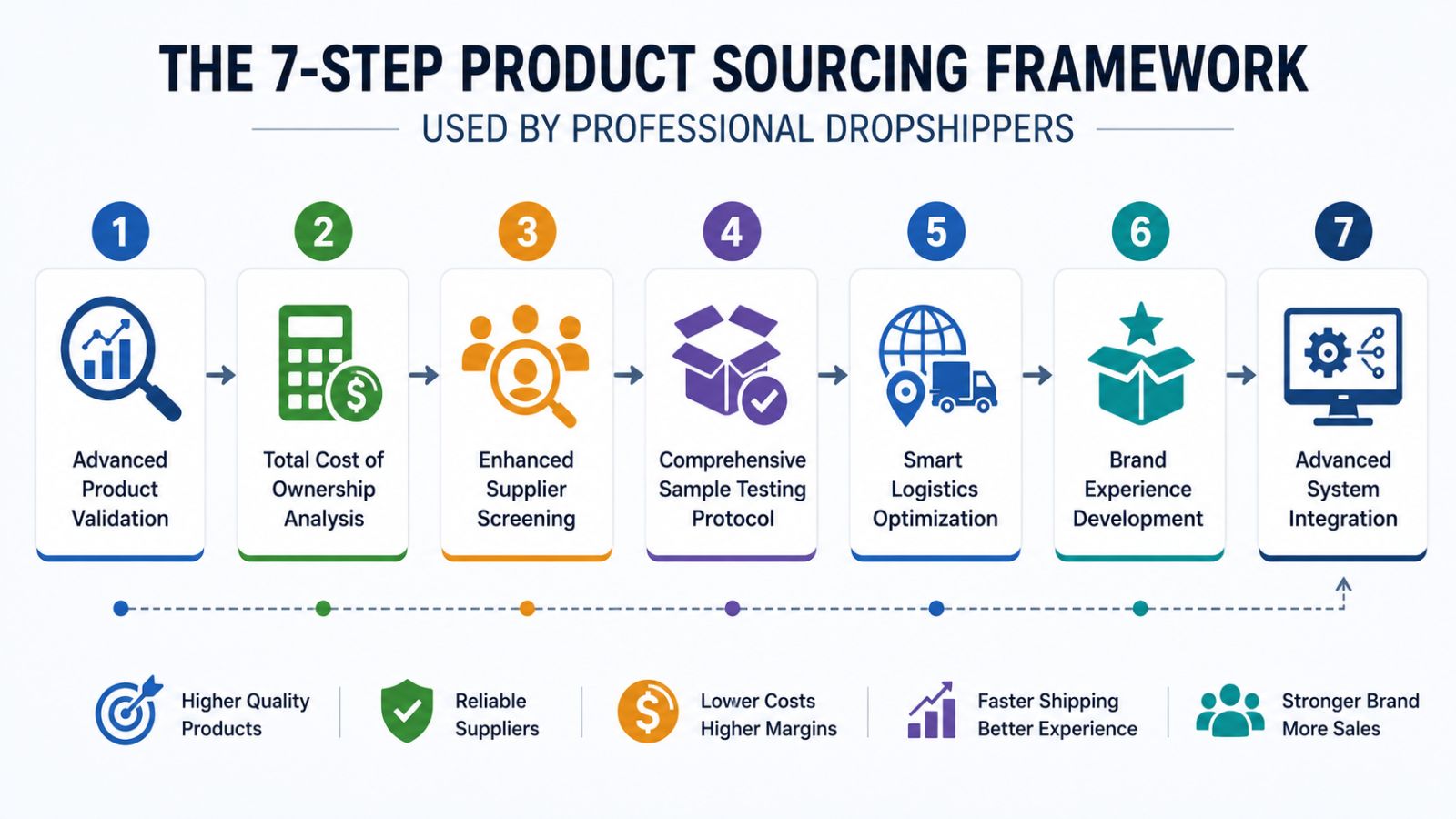
Step 1: Advanced Product Validation
Smart dropshippers validate demand using multiple data sources before committing to suppliers:
- Run AI-powered market analysis to confirm trending demand
- Test with micro-influencer partnerships for authentic feedback
- Analyze competitor offerings and customer reviews across platforms
- Use social listening tools to identify customer pain points
- Validate product compliance with 2026 regulations
This comprehensive validation prevents investing time and resources into products with limited or declining demand.
Step 2: Total Cost of Ownership Analysis
Develop a complete understanding of true product costs including new factors relevant to 2026:
- Base product cost at different volume tiers
- Shipping cost to each target market
- Carbon offset costs for sustainable shipping
- Import duties and taxes (including new digital services taxes)
- Return/replacement percentage estimate
- Packaging and branding costs
- Compliance and certification costs
This detailed breakdown prevents margin erosion as you scale and ensures profitability remains viable.
Step 3: Enhanced Supplier Screening
Verify supplier legitimacy and capability through modern verification methods:
- Digital business license verification through official databases
- Virtual factory tours using VR technology when available
- Third-party supplier verification services
- Sample orders from multiple potential suppliers
- Response time testing across different communication channels
- ESG (Environmental, Social, Governance) compliance verification
The best dropshippers often evaluate 4-6 potential suppliers before selecting their primary partner.
Step 4: Comprehensive Sample Testing Protocol
Test thoroughly using systematic approaches:
- Order samples across multiple time periods to test consistency
- Conduct durability testing appropriate to product category
- Evaluate packaging for shipping protection and sustainability
- Measure actual delivery times to different addresses
- Test with focus groups for unbiased feedback
- Document all findings in standardized evaluation sheets
This systematic approach provides objective comparison data across supplier options.
Step 5: Smart Logistics Optimization
Optimize your shipping approach using 2026 technologies:
- Evaluate AI-powered shipping route optimization
- Compare carbon-neutral shipping options
- Consider duty-paid shipping for EU/UK markets
- Set up real-time tracking integrations
- Establish automated exception handling protocols
- Plan for peak season capacity scaling
The right logistics setup can reduce delivery times by 40-60% while maintaining cost efficiency.
Step 6: Brand Experience Development
Create differentiated customer experiences:
- Design sustainable packaging that reflects brand values
- Develop branded inserts optimized for social sharing
- Create unboxing standards that encourage user-generated content
- Implement authentication features for premium products
- Define packaging protection requirements for different product types
- Plan seasonal packaging variations
Well-executed brand experiences typically increase repeat purchase rates by 25-55% over generic packaging.
Step 7: Advanced System Integration
Establish operational excellence through technology:
- Implement AI-powered order routing for optimal fulfillment
- Set up predictive inventory management
- Create automated customer communication workflows
- Establish real-time performance monitoring dashboards
- Implement exception handling with automatic escalation
Proper automation reduces fulfillment errors by over 95% while enabling rapid scaling.
Common Mistakes That Derail Dropshipping Businesses
After observing hundreds of dropshipping operations, certain patterns of failure become clear. These mistakes are particularly costly in 2026's competitive environment.
Understanding these common mistakes helps you anticipate and prevent supply chain problems before they damage your customer relationships and reputation.
Selecting Suppliers Based Solely On Price
The cheapest supplier almost always becomes the most expensive in the long run. Lower prices typically come through compromises in:
- Quality control rigor
- Shipping carrier quality and reliability
- Packaging durability and presentation
- Communication responsiveness
- Problem resolution capabilities
- Compliance with environmental standards
Calculate the true cost including returns, customer service time, lost repeat business, and brand damage before choosing the lowest bidder.
Neglecting Comprehensive Shipping Testing
Many dropshippers test product quality but fail to thoroughly test shipping performance across variables:
- Order to multiple addresses in different regions, not just your own
- Test during normal periods AND holiday seasons
- Evaluate package condition and presentation upon arrival
- Measure actual delivery against promised times
- Test tracking accuracy and customer communication
- Verify performance during supply chain disruptions
Shipping performance often varies dramatically by destination and season, even with the same supplier.
Operating Without Supplier Redundancy
Single-supplier dependency creates existential business risk in an increasingly volatile global environment. Develop:
- Primary supplier for main operations (60-70% of volume)
- Secondary supplier for overflow and comparison (20-25% of volume)
- Emergency supplier for critical situations (10-15% of volume)
- Geographic diversification when possible
Approximately 25-30% of established dropshippers face major supplier disruptions annually - having alternatives ready prevents business interruption.
Ignoring Environmental and Compliance Requirements
Failing to address sustainability and compliance creates significant 2026 risks:
- Consumer preference increasingly favors sustainable businesses
- Regulatory requirements for environmental reporting
- Platform policies favoring environmentally responsible sellers
- Potential fines for non-compliance with evolving regulations
Integrate sustainability considerations into supplier selection from the beginning rather than retrofitting later.
Premature Scaling Before Operational Excellence
The most common fatal mistake is scaling advertising before fulfillment operations achieve stability:
- Verify consistent delivery times over 50+ orders across different periods
- Confirm supplier capacity for 5-10x current volume
- Test customer service response processes under load
- Ensure automation systems function properly at scale
- Validate profit margins remain healthy at higher volumes
- Confirm quality control maintains standards with increased volume
Operational problems multiply exponentially with volume - what's manageable at 15 orders/day becomes catastrophic at 150 orders/day.
Supplier Types Comparison: Making The Right Choice For Your Stage
Different supplier models serve different business stages. This comparison reflects 2026 market realities and helps identify the right approach for your current needs.
Understanding the capabilities and limitations of each supplier type helps you make strategic decisions as your business evolves from testing to scaling.
| Характеристика | Marketplace | Private Agent | Партнер по выполнению заказов |
|---|---|---|---|
| Startup Ease | ✅ Simple registration | ✅ Basic onboarding | ⚠️ More formal process |
| Minimum Order | ✅ No minimum | ⚠️ Often 10-15 orders/day | ⚠️ Usually 25+ orders/day |
| Product Range | ✅ Vast AI-curated selection | ✅ Wide through sourcing | ⚠️ Curated quality selection |
| Branding Options | ❌ Very limited | ⚠️ Basic capabilities | ✅ Comprehensive options |
| Контроль качества | ❌ Minimal/None | ⚠️ Basic inspection | ✅ Systematic AI-powered processes |
| Shipping Speed (EU) | ❌ 12-35 days typically | ⚠️ 6-12 days average | ✅ 5-8 days stable |
| Shipping Speed (US) | ❌ 15-40 days typically | ⚠️ 8-15 days average | ✅ 6-10 days stable |
| Automation | ❌ Limited/Manual | ⚠️ Partial automation | ✅ Full AI integration |
| Масштабируемость | ❌ Problematic at volume | ⚠️ Moderate capacity | ✅ Built for scale |
| Problem Resolution | ❌ Often difficult | ⚠️ Variable by agent | ✅ Systematic processes |
| Устойчивость | ❌ Limited options | ⚠️ Basic offerings | ✅ Comprehensive programs |
| Эффективность затрат | ✅ Lowest entry cost | ⚠️ Moderate pricing | ⚠️ Higher but better value |
This progression reflects the typical evolution of successful dropshipping businesses:
- Testing phase: Marketplace suppliers (0-50 orders/month)
- Growth phase: Private agents (50-500 orders/month)
- Scaling phase: Fulfillment partners (500+ orders/month)
- Maturity phase: Hybrid of fulfillment and owned inventory
Final Pre-Scaling Checklist: Ensuring Supply Chain Readiness
Before increasing your advertising budget and order volume, verify these critical elements are in place for 2026 market conditions.
Supply chain readiness determines whether scaling becomes profitable growth or expensive chaos. This checklist identifies potential breaking points before they impact customers.
Product Readiness
- ☐ Multiple samples tested and approved across seasonal variations
- ☐ Product consistently matches marketing claims and customer expectations
- ☐ Variations/options verified and inventory-synchronized
- ☐ Durability confirmed for shipping conditions and customer use
- ☐ Compliance verified for all target markets and current regulations
- ☐ Sustainability credentials documented and verified
Advanced Logistics Confirmation
- ☐ Shipping times tested to all target regions during different seasons
- ☐ Tracking functionality verified with customer communication flow
- ☐ Package condition and presentation documented upon arrival
- ☐ Customs/import process smooth for all international destinations
- ☐ Shipping costs confirmed scalable with volume discounts
- ☐ Carbon-neutral shipping options available and tested
Customer Experience Excellence
- ☐ Packaging presentation finalized with sustainability considerations
- ☐ Branding elements implemented and tested for social sharing
- ☐ Inserts/manuals accurate, professional, and engaging
- ☐ Unboxing experience optimized for user-generated content
- ☐ Return process verified through comprehensive test cases
- ☐ Customer service scripts prepared for all common scenarios
Технологическая инфраструктура
- ☐ Order sync automation functioning across all scenarios
- ☐ Real-time inventory visibility systems operational
- ☐ Order status updates reliable and customer-facing
- ☐ Exception handling processes automated with escalation
- ☐ Performance analytics dashboard providing actionable insights
- ☐ AI-powered optimization systems configured and tested
Business Protection and Compliance
- ☐ Supplier agreements documented with performance standards
- ☐ Quality standards clearly defined with measurement criteria
- ☐ Problem resolution procedures established and tested
- ☐ Backup suppliers identified, tested, and ready for activation
- ☐ Financial projections validated at scale with stress testing
- ☐ Compliance documentation current for all operating jurisdictions
Completing this checklist before scaling advertising significantly reduces the risk of operational collapse during growth phases and ensures sustainable expansion.
How Serious Dropshippers Build Long-Term Business Stability
The dropshipping landscape has evolved dramatically by 2026, with successful operations adopting sophisticated approaches that prioritize sustainability and customer experience.
The most significant shift in dropshipping is the transition from a "product testing mindset" to a "brand and sustainability mindset" that prioritizes customer experience, environmental responsibility, and operational excellence.
The New Fundamentals of Sustainable Dropshipping in 2026
Market conditions have changed dramatically:
- Ad costs have increased 60-80% since 2024
- Customer delivery expectations have shortened by 50%
- Environmental consciousness influences 70% of purchase decisions
- Platform policies strongly favor established, responsible sellers
- AI and automation are now essential for competitive operations
In response, winning dropshippers now focus on:
Predictable Delivery Experience
- Consistently achieving 5-8 day shipping to primary markets
- AI-powered delivery prediction with 95%+ accuracy
- Proactive communication about shipping status
- Carbon-neutral shipping options prominently featured
Authentic Brand Identity Development
- Sustainable packaging and unboxing experiences
- Consistent visual language reflecting brand values
- Quality control that exceeds brand promises
- Community-building through shared values
Operational Excellence Through Technology
- AI-powered order processing and routing
- Predictive inventory management preventing stockouts
- Automated customer service with human escalation
- Data-driven decision making across all operations
Supply Chain Resilience and Responsibility
- Multiple supplier relationships with redundancy planning
- Strategic buffer inventory for best-selling products
- Comprehensive contingency plans for disruptions
- ESG compliance throughout the supply chain
These elements transform dropshipping from a tactical experiment into a strategic business model capable of long-term growth, profitability, and positive impact.
Ready To Build A More Stable Dropshipping Supply Chain?
If you've reached the point where supply chain limitations are constraining your growth, it may be time to upgrade your approach to meet 2026 market demands.
The transition to a professional fulfillment model typically becomes appropriate when you're processing 25+ orders daily, have validated product-market fit, and are ready to build sustainable competitive advantages in an increasingly sophisticated market.
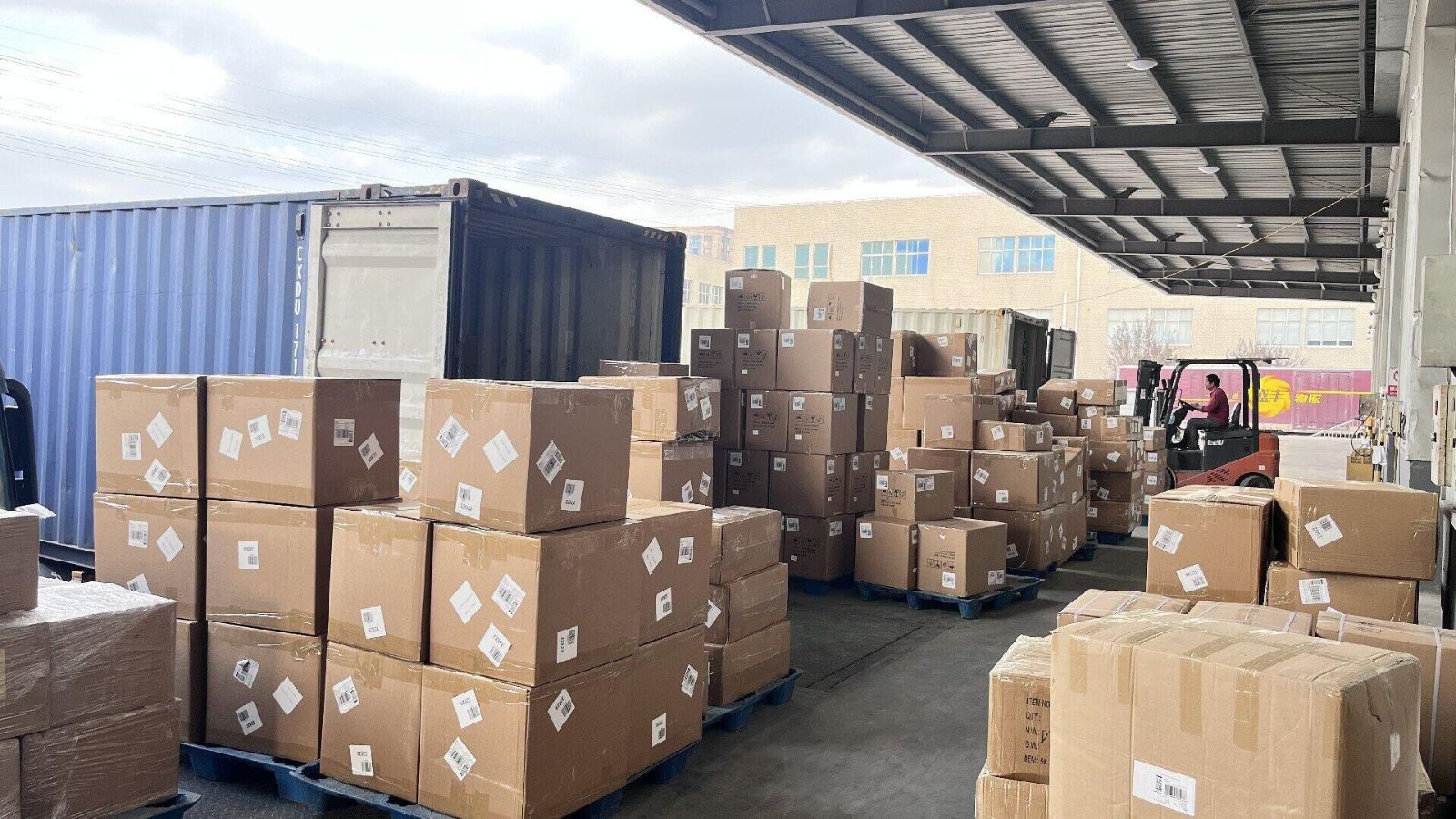
Is Your Business Ready For A 2026-Caliber Fulfillment Partnership?
Consider this upgrade when:
- You're consistently processing 25+ orders daily with growth trajectory
- Your primary markets demand delivery times under 8 days
- You're targeting environmentally conscious consumers
- You want to develop private label or sustainably branded products
- Inconsistent supplier performance is limiting your scaling potential
- You're spending excessive time on manual order processing
- You're ready to implement AI-powered optimization
- Compliance and sustainability are becoming customer requirements
A structured fulfillment partnership provides the technological and operational foundation needed to compete effectively in 2026's evolved dropshipping landscape.
At DragonFulfill, we specialize in helping dropshipping businesses make this critical transition, providing the supply chain infrastructure that transforms promising stores into sustainable brands capable of thriving in the modern e-commerce environment.
Reach out today for a consultation to evaluate whether a professional fulfillment partnership aligns with your current business stage and 2026 growth objectives.
Your success depends not just on what you sell, but how sustainably and reliably you deliver on your promises. Make sure your supply chain supports both your ambitions and your values.


 English
 Spanish
 Portuguese
 Russian
 German
 Polish