
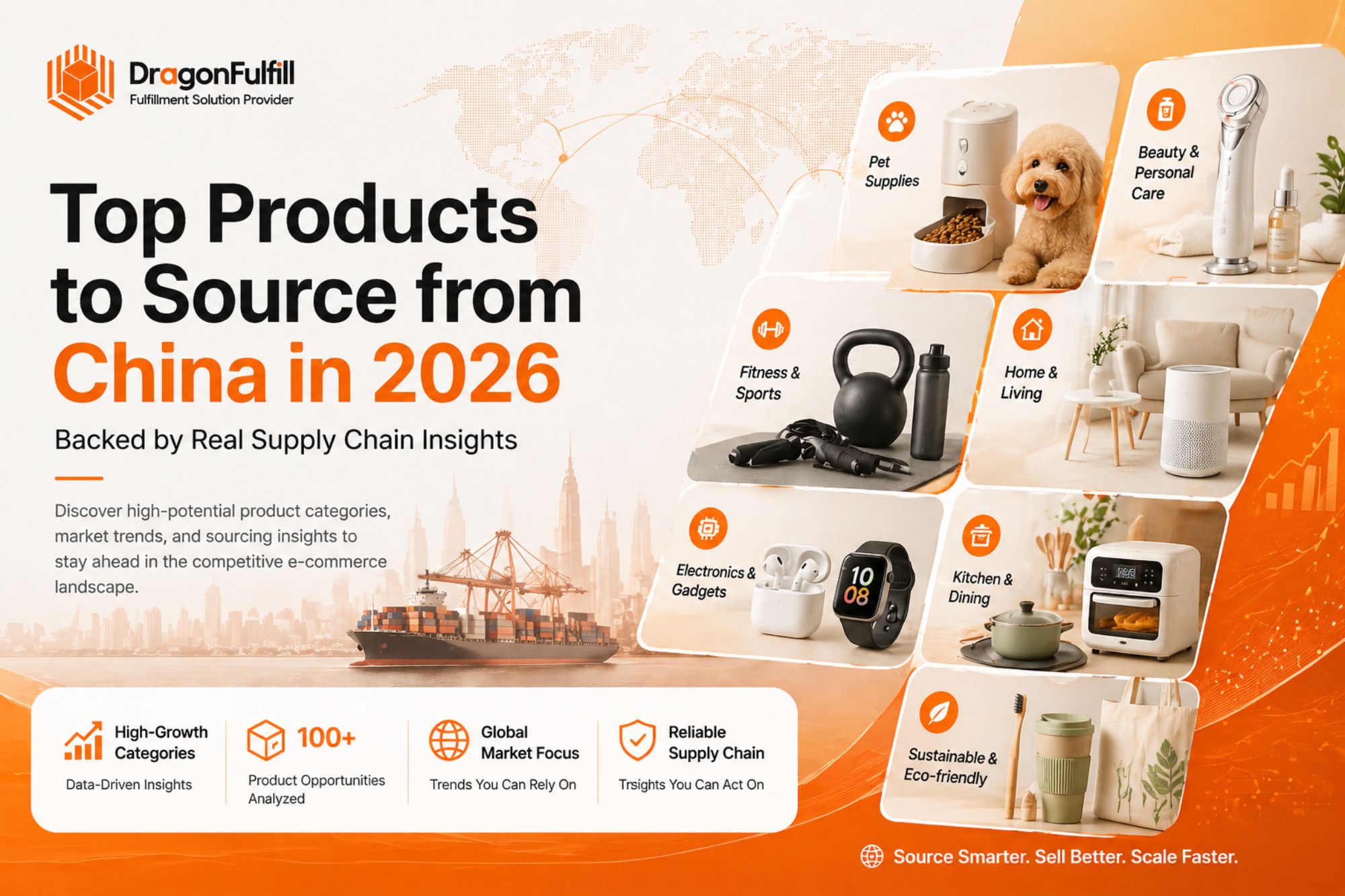
If you’ve ever tried to find a “winning product,” you already know how unpredictable it can be.
One week something is trending.
The next week, it’s everywhere.
So instead of chasing trends blindly, it’s often more useful to step back and ask a different question:
👉 Which products are actually supported by strong, scalable supply chains?
Because behind every product that sells consistently, there’s usually a system that makes it viable—not just viral.
A Better Way to Think About Product Selection
Most sellers focus on:
“What’s trending right now?”
But experienced operators tend to think in terms of:
“What can I reliably source, improve, and scale?”
That shift sounds subtle—but it changes everything.
Because once a product proves demand, your real challenge becomes:
- Can you restock quickly?
- Can you maintain consistent quality?
- Can you ship it efficiently?
Pet Products: Emotional Spending Meets Product Innovation
Automatic Cat Litter Boxes
Smart features, odor control, and convenience-driven design continue to push demand—especially in the US and Europe.
Pet Grooming Kits
Bundled tools (clipper + vacuum + brush) perform well because they simplify a routine task.
Smart Pet Feeders
Adding scheduling and camera features turns a simple product into something users rely on daily.
What makes this category interesting isn’t just growth—it’s the willingness of customers to pay for better experiences.
Home & Organization: Quiet but Consistent Performers
Modular Storage Systems
Products that adapt to space tend to generate repeat purchases.
Under-Sink Organizers
Simple, problem-solving items that perform well in short-form video content.
Foldable Furniture
Especially relevant in urban markets where space efficiency matters.
These are not always “exciting” products—but they are dependable.
Beauty & Personal Care: Perception Creates Value
LED Facial Devices
Combining skincare with technology continues to drive interest.
Nail Drill Machines
Supported by the growing DIY beauty segment.
Electric Cleaning Brushes
Highly visual products that are easy to demonstrate and understand.
What stands out here is how much perceived value can exceed manufacturing cost.
Fitness & Lifestyle: Driven by Cycles, Not Just Trends
Resistance Band Sets
Lightweight, versatile, and ideal for bundling.
Smart Jump Ropes
Adding simple tracking features can make a basic product more engaging.
Portable Massage Guns
Still relevant, especially when differentiated through design or positioning.
This category rewards speed—but also flexibility.
Kitchen & Everyday Products: The Volume Layer
Portable Blenders
Strong overlap with lifestyle content and daily routines.
Multifunctional Choppers
Products that clearly solve a problem tend to convert well.
Insulated Drinkware
A category that never really disappears—only evolves in design.
These products rarely “explode,” but they build steady volume over time.
Travel & Utility Products: Often Overlooked
Car Organizers
Simple, practical, and consistently in demand.
Portable Tire Inflators
A classic example of a high-conversion, problem-solving product.
Cable Management Kits
Low cost, easy to bundle, and widely needed.
What these products share is straightforward value—they don’t need much explanation.
The Role of Bundling
Some of the most efficient sellers don’t rely on a single product.
Instead, they build small systems:
- Fitness starter kits
- Pet care bundles
- Travel utility packs
Bundling can improve:
- Average order value
- Shipping efficiency
- Customer satisfaction
And often, it’s easier to differentiate a bundle than a single SKU.
What These Products Have in Common
If you step back, these products aren’t random.
They tend to share a few characteristics:
- They come from well-developed manufacturing regions
- They can be iterated or improved
- They solve clear, everyday problems
- They can scale operationally
👉 In other words, they are not just “interesting”—they are buildable.
Where Many Sellers Get Stuck
Choosing a product is only the first step.
The real complexity shows up later:
- Comparing suppliers with inconsistent pricing
- Managing production timelines
- Coordinating shipping
- Keeping inventory aligned with demand
This is also where many sellers start to realize that product selection and supply chain management are more connected than they initially thought.
A More Sustainable Approach
Instead of constantly chasing new products, some sellers shift toward a more structured process:
- Focus on one strong category
- Validate demand before scaling
- Build a small group of related products
- Improve sourcing and consistency
- Optimize fulfillment over time
It’s a slower approach at the beginning—but often more stable in the long run.
A Quiet Shift Behind the Scenes
As operations become more complex, many sellers gradually change how they work.
Some continue managing everything internally.
Others start relying on external systems or partners to simplify parts of the process—whether that’s sourcing, inventory, or fulfillment.
For example, some teams choose to work with partners like DragonFulfill to reduce coordination across multiple suppliers and make fulfillment more predictable.
It’s not about replacing control—but about removing unnecessary friction.
Final Thought
There will always be new products entering the market.
But the difference between short-term wins and long-term growth usually comes down to something less visible:
How well your operations support what you sell.
Because in the end, finding a product gets you started.
But building the system behind it is what allows you to keep going.


 English
 Spanish
 Portuguese
 Russian
 German
 Polish